
- Confidence & Child Development
Why Some Children Find It Hard to Make Friends (And How to Help)
Wondering why your child struggles to make friends? Discover common reasons, expert advice & how performing arts classes can help build social confidence.
Watching your child stand at the edge of a playground, unsure how to join in, is one of those parenting moments that stays with you. If you’ve ever typed “why does my child struggle to make friends” into a search bar at 11pm, you are not alone, and more importantly, you are not failing. Social confidence doesn’t come automatically to every child, and for many, it takes time, the right environment, and a little gentle encouragement to find its footing. This article explores the most common reasons children find friendships tricky, what you can do to help, and how structured, creative activities can make a real and lasting difference.
Key Takeaways
- Many children struggle to make friends at some stage, and it is rarely a cause for alarm.
- Shyness, anxiety, and limited social opportunity are among the most common reasons children find friendships difficult.
- Social skills are learned, not innate: the right environment and regular practice make a significant difference.
- Structured, interest-led activities are among the most effective ways to build social confidence in children.
- Drama and performing arts classes offer a uniquely supportive, low-pressure environment for children who feel anxious or isolated socially.
- Small, consistent steps taken over time tend to produce the most meaningful and lasting change.
Why Do Some Children Find It Hard to Make Friends?
There is no single answer to this question, and that is actually reassuring. Children are individuals, and the reasons one child finds socialising easy while another finds it exhausting are as varied as the children themselves. What we do know is that struggling to make friends is far more common than most parents realise, and it almost never means something is fundamentally wrong.
Some children are naturally more introverted, meaning they find social interaction tiring rather than energising. They may genuinely enjoy their own company and simply need more time to warm up to new people. Others may have had limited opportunities to practise socialising, particularly if they are an only child, have recently moved, or haven’t yet found a peer group with shared interests. Social development also varies considerably between children of the same age: some four-year-olds are natural connectors, while others are still figuring out how to share a toy without it becoming a negotiation.
For parents exploring options, enrolling a child in a performing arts school that prioritises friendship and confidence can provide a consistent, structured social environment outside of the school day, one that complements rather than replaces what happens in the classroom.
- Shyness vs. Social Anxiety: Is There a Difference?
These two terms are often used interchangeably, but they describe quite different experiences. Shyness is a temperament trait: a tendency to feel cautious or reserved in new social situations. Most shy children warm up over time, and with the right support, they develop confidence at their own pace. Social anxiety, on the other hand, is a more persistent and intense fear of social situations that can interfere with a child’s daily life, causing them to avoid group settings, become distressed before social events, or withdraw from interactions they would otherwise enjoy.
If your child’s social difficulties are causing significant distress, or if avoidance is becoming a pattern, it may be worth speaking to your GP or a child psychologist. For the majority of children, however, what looks like social anxiety is often shyness combined with limited social experience, and both respond well to patient, low-pressure support.
- The Role of Social Skills Development in Early Childhood
Here is something that often surprises parents: social skills are not something children either have or don’t have. They are learned. Just like reading or riding a bike, the ability to initiate conversation, take turns, read social cues, and navigate disagreements develops with practice and the right kind of guidance.
Children who have had fewer opportunities to practise these skills, whether due to personality, circumstance, or simply age, are not behind in any permanent sense. They just need more deliberate, supportive practice. This is why the environment in which a child socialises matters so much. A setting that feels safe, fun, and free from judgment gives children the space to experiment with social interaction without the fear of getting it wrong.
Signs Your Child May Be Struggling Socially
It can be hard to know whether what you’re observing is typical development or something worth paying closer attention to. Here are some signs that a child may be finding social connection more difficult than their peers:
- They regularly come home from school saying they had no one to play with.
- They seem reluctant or anxious about attending parties, group activities, or playdates.
- They talk about feeling left out or not being liked, even in settings where other children seem welcoming.
- They prefer solitary play consistently and show little interest in connecting with peers.
- They struggle to resolve minor conflicts and tend to withdraw rather than work things through.
None of these signs in isolation is cause for alarm. Children go through phases, and some of these behaviours are entirely developmentally appropriate at certain ages. But if several of these patterns are persistent and causing your child distress, it’s a signal worth taking seriously and responding to with warmth and practical action.
How to Help a Shy Child Make Friends?
Knowing how to help a shy child make friends begins with one important shift in perspective: rather than trying to change who your child is, the goal is to create the conditions in which their natural social instincts can develop at their own pace. Pressure, however well-intentioned, tends to backfire. Patience, paired with the right opportunities, tends to work.
- Creating Low-Pressure Opportunities for Connection
One of the most effective things you can do is arrange one-on-one playdates rather than group settings. A shy child who feels overwhelmed in a group of five will often thrive when it’s just them and one other child. Shared activities help too: when children have something to do together (building something, watching a film, playing a game), the pressure to make conversation disappears, and connection happens naturally.
For very young children,parent-and-child performing arts sessions designed to build early social skills offer the presence of a trusted adult in the room, making the transition into group settings much gentler and easing them into peer interaction before they are ready to navigate it independently.
Avoid forcing your child into social situations they are clearly not ready for. A child who has a miserable time at a birthday party they were pushed to attend is less likely to want to try again next time. Gradual exposure, with your support and encouragement, builds far more durable confidence.
- How to Talk to Your Child About Friendships?
The language you use matters enormously. Asking “Did you make any friends today?” puts a lot of pressure on a small child. Instead, try more open questions: “Who did you sit next to at lunch?” or “Was there anyone funny in your class today?” These questions invite conversation without implying that anything is wrong if the answer is unremarkable.
Validate your child’s feelings without amplifying your own anxiety. If they say “nobody wanted to play with me,” acknowledge how hard that feels before moving into problem-solving mode. Children who feel heard are far more willing to keep trying than those who feel their struggles are being minimised or fixed away.
Social Skills Activities for Children That Actually Work
Not all activities are equally effective at building social confidence. The key ingredients are: a shared focus that reduces the pressure of direct conversation, a consistent peer group that children see regularly, a non-competitive atmosphere where contribution is valued over performance, and adult facilitation that models positive social behaviour.
Social skills activities for children that tend to work particularly well include group drama and role-play, collaborative storytelling, team-based creative projects, ensemble music or performance, and structured group games with clear rules. What these activities have in common is that they give children a reason to interact, a role to play, and a safe container for social experimentation.
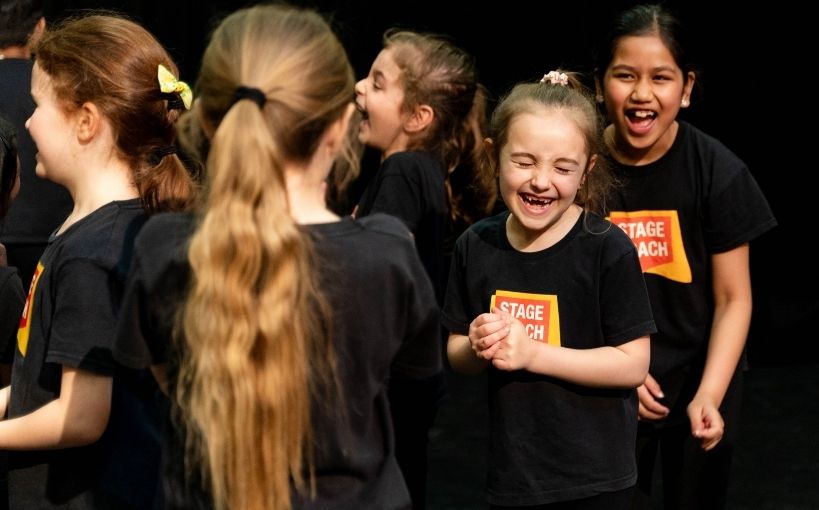
One reason group drama works so well for socially anxious children is that performing arts environments remove the pressure of competitive social dynamics: every child is treated as an equal contributor, which makes it much easier for quieter personalities to open up, take creative risks, and begin to feel genuinely seen by their peers. When a child asks which activities are best for helping children who struggle to make friends, performing arts classes consistently stand out because they combine structured social practice with genuine creative joy, giving shy children a reason to engage that feels natural rather than forced.
Why Creative and Performing Arts Activities Are Particularly Effective
Drama and performing arts classes do something quite specific that most other activities don’t: they teach children to inhabit other perspectives. When a child takes on a character, they practise empathy. When they perform in an ensemble, they practise listening and timing. When they improvise with a partner, they practise reading social cues and responding in real time.
These are not incidental benefits. They are direct social skills, practised repeatedly in a context that feels playful rather than instructional. Children who might freeze up in a standard social situation often find that the structure of a drama exercise gives them a framework for interaction that feels manageable. Over weeks and terms, those frameworks become instincts.
Performing arts classes for 4 to 6 year-olds give shy children a ready-made reason to interact, removing the pressure of having to initiate conversation from scratch. The activity does the social heavy lifting, and friendship follows naturally from the shared experience.
How Stagecoach Performing Arts Helps Children Build Social Confidence
According to Stagecoach Performing Arts, the performing arts are the method and personal development is the product. Founded in 1988 and now operating across eight countries, Stagecoach has supported over one million students in developing the confidence, communication skills, and resilience they need to thrive, not just on stage, but in every area of their lives.
Stagecoach’s educational framework is built around five pillars: Life Skills, Singing, Dancing, Acting, and Performance and Stagecraft. For younger children, the Life Skills pillar is often the one parents notice first. Children learn to listen, collaborate, take turns, and express themselves in a group setting where every contribution is welcomed and no one is left on the sidelines.
For children aged 4 to 6, the Early Stages programme runs for 90 minutes each week during term time, covering singing, dancing, and acting in a warm, nurturing group environment. Classes take place at weekends, so they never cut into school time. The structure is consistent enough to build genuine friendships over a term, but relaxed enough that children who are anxious about new situations can find their feet without pressure.
If you’re wondering whether this might be right for your child, Stagecoach recommends starting with a Two-Week Trial: a low-commitment way to experience the classes before deciding whether to enrol for a full term. For parents searching for extracurricular activities for lonely children, this kind of consistent, interest-led group outside of school can be genuinely transformative. Children who struggle in school social settings often find it much easier to connect in a smaller, creativity-focused environment where they feel equally capable and equally valued.
Stagecoach’s approach to drama classes for children with social anxiety is grounded in gradual, supported exposure rather than performance pressure. There are no auditions, no competitive rankings, and no expectation of prior experience. Children are guided through games, ensemble work, and creative challenges at a pace that builds confidence without overwhelming it.
What to Expect When Your Child Joins a New Group?
First-day nerves are completely normal, and it would be surprising if a child felt none at all. Walking into a room full of unfamiliar faces is daunting for adults too, and children feel it just as keenly. The good news is that a well-run performing arts class is specifically designed to dissolve that awkwardness quickly.
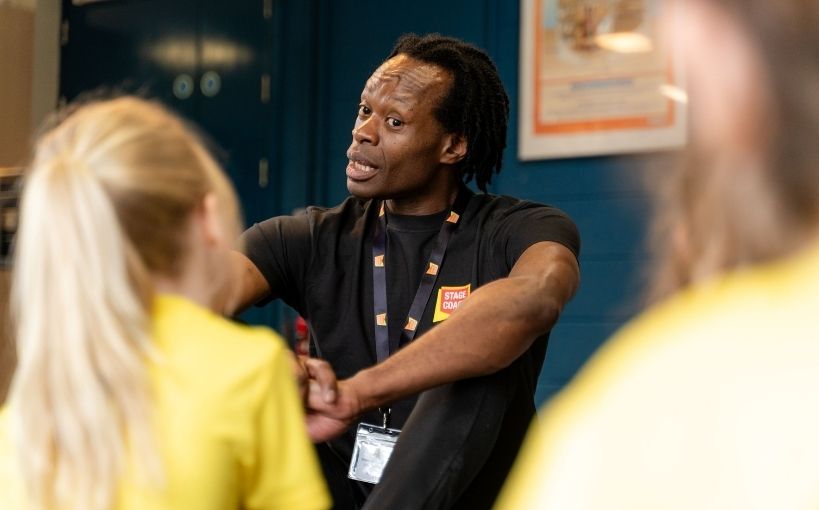
Experienced Stagecoach teachers understand that the first session is about comfort, not performance. Warm-up games, ensemble activities, and structured creative play give children an immediate shared experience, which is the fastest route to connection. Most children are so absorbed in what they are doing within the first fifteen minutes that the nerves fade before they have a chance to take hold.
It helps to arrive a few minutes early so your child can settle into the space before it fills up. Talk to them beforehand about what to expect: not in a way that builds it up too much, but enough that there are no surprises. Remind them that everyone else is there to have fun, and that they don’t need to be brilliant at singing or dancing to belong. They just need to show up.
Research increasingly points to the link between in-person group activities and children’s ability to form meaningful friendships, something that screen-based socialising alone cannot replicate. The regularity of a weekly class, with the same group of children and the same trusted adults, creates exactly the kind of consistent, low-pressure social environment in which quieter children begin to flourish.
If your child tries a session and isn’t immediately certain, that’s fine too. The Two-Week Trial exists precisely for this reason: to give children and parents the space to make a genuinely informed decision, without any pressure to commit before it feels right.
Give Your Child the Space to Find Their People
Every child deserves to feel like they belong somewhere. If your child is finding friendships difficult right now, it won’t always be this way, and the most powerful thing you can do is find them a warm, consistent, creative community where they can practise being themselves.
At Stagecoach, we believe that Creative Courage for Life® starts with feeling safe enough to show up. Our Early Stages classes for children aged 4 to 6 are designed for exactly this: building confidence, making connections, and discovering what your child is capable of when they are given the right environment to grow. No prior experience needed, no pressure to perform, just a welcoming group of children and expert teachers who know how to bring out the best in every child.
Find your nearest school and book your Two-Week Trial today. It might just be the beginning of something wonderful.
FAQs about Children Who Struggle to Make Friends
Why does my child struggle to make friends?
There are many reasons a child might find it hard to make friends, and most of them are completely normal. Some children are naturally more introverted, some take longer to feel comfortable in new environments, and some simply haven’t yet had the right opportunities to practise social skills. It rarely means anything is wrong with your child. With the right support and regular, low-pressure social settings, most children develop their confidence and friendship skills over time.
How can I help my shy child make friends?
The most effective thing you can do is create regular, relaxed opportunities for your child to interact with peers in a setting they enjoy. Structured activities like drama classes, group games, or creative workshops give children a shared focus, which takes the pressure off conversation and lets friendships form naturally. Acknowledging your child’s feelings without dismissing them, and celebrating small social wins, builds the confidence they need to take the next step.
What social skills activities are best for children who struggle socially?
Activities that involve collaboration, turn-taking, and creative expression tend to work especially well. Drama and performing arts classes are particularly effective because they build communication, empathy, and listening skills in a fun, low-stakes environment. Group storytelling, role-play, and ensemble activities teach children how to read social cues, express themselves, and connect with others: all without the pressure of forced conversation.
Are extracurricular activities helpful for children who feel lonely or left out?
Yes, and they can be genuinely transformative. Extracurricular activities give children a consistent group of peers outside of school, which is especially valuable for children who find the school social environment overwhelming. Shared interests create an instant common ground, making it much easier for quieter or more anxious children to find their people and build real, lasting friendships.
Can drama classes help children with social anxiety?
Drama classes can be a wonderful environment for children who experience social anxiety. Rather than putting children on the spot, good drama teaching uses games, ensemble work, and gradual creative challenges to build confidence in a supportive group setting. Over time, children learn to express themselves, trust others, and feel comfortable being seen: skills that directly support their ability to connect socially both inside and outside the classroom.
At what age do children usually start to form friendships?
Children begin to show interest in other children from as young as two or three, but the ability to form genuine, reciprocal friendships typically develops between the ages of four and seven. This is when children start to understand sharing, empathy, and cooperation. If your child is in this age range and finding friendships tricky, it is very common, and the right activities at this stage can make a real difference to their social development.
What if my child is nervous about joining a new group or class?
First-day nerves are completely normal, and most children feel them. It helps to talk openly about what to expect, arrive a little early so your child can settle in before others, and remind them that everyone else is there to have fun too. Many performing arts schools offer trial sessions so your child can experience the environment before committing, which can take a lot of the anxiety out of that first step.
My child struggles to make friends at school. Should I try a different social environment?
Sometimes a change of setting is exactly what a child needs. School social dynamics can be complex, and some children find it much easier to connect with peers in a smaller, interest-led group outside of school. A new environment, especially one built around creativity and play, can give your child a fresh start, a new peer group, and the chance to be seen differently. Many parents find that their child’s school confidence also improves once they have found their footing elsewhere. Stagecoach Performing Arts offers weekly classes for children from age 4, with a Two-Week Trial available so families can explore whether it’s the right fit before committing to a full term.
Find Your Local School


