
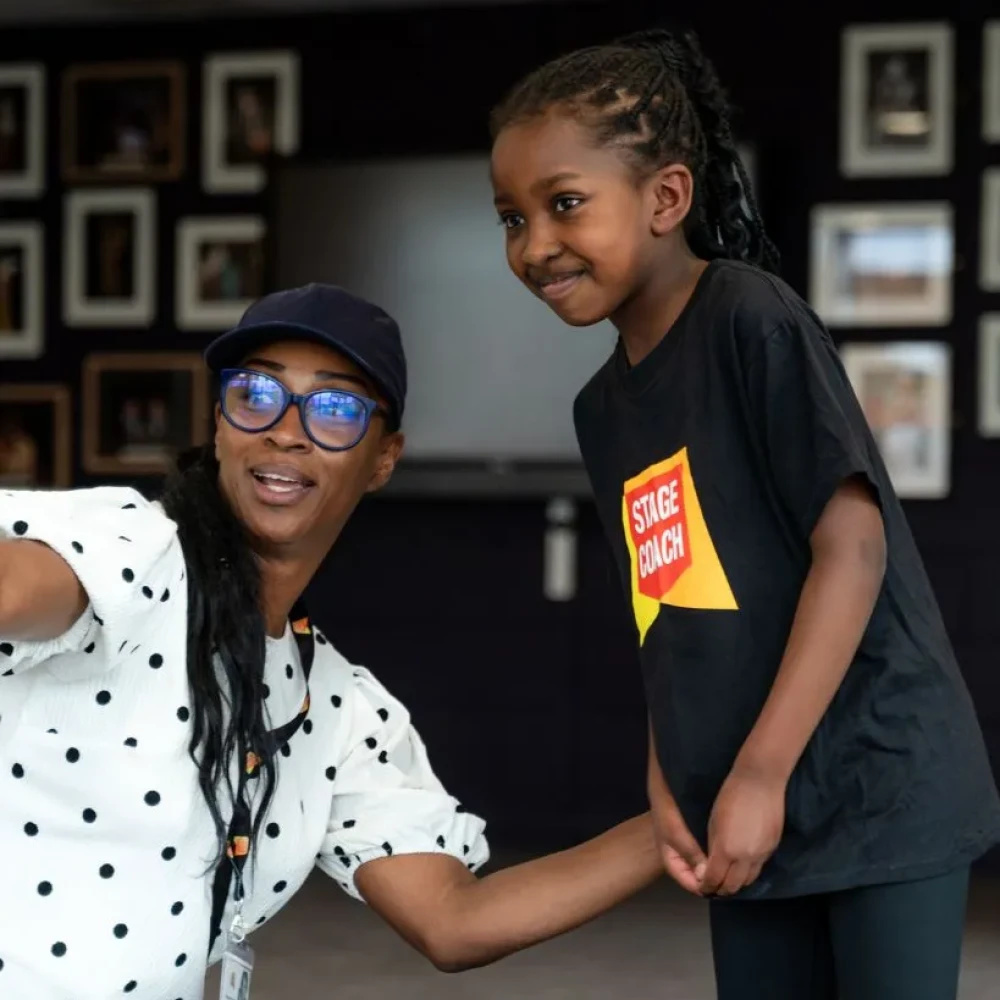
- Confidence & Child Development
- Parent Guides
The Real Hobbies for Shy Children: Why Performing Arts Works for Kids Who Don’t Like Attention
Discover why performing arts is one of the best hobbies for shy children, and how Stagecoach helps hesitant kids grow in confidence at their own pace.
Choosing the right activity for a shy child carries a weight that other parents might not fully appreciate. You want something that stretches your child gently, builds their confidence, and gives them a place where they feel genuinely welcome, not overwhelmed. Performing arts might seem like an unlikely answer. Stages, spotlights, and audiences don’t exactly scream “low pressure.” But here’s the thing: for children who find the world a little too loud, a little too exposing, performing arts classes are often the most transformative hobbies for shy children you’ll find.
Here’s why.
Key takeaways
- No prior experience or confidence is needed to start performing arts classes, every child begins exactly where they are
- Classes are built around gradual, pressure-free progression, so no child is ever pushed before they’re ready
- Singing, dancing, and acting each develop communication, self-expression, and social skills in natural, playful ways
- Performing arts builds lifelong confidence, not just stage skills, through creativity, teamwork, and belonging
- Age-appropriate classes are available from as young as two years old, with parent-accompanied options for the youngest students
- The environment is warm, inclusive, and free from judgement, there are no wrong answers, and no child is made to feel behind
Why Shy Children Often Struggle to Find the Right Hobby
Finding the right fit for a shy child can feel like a long process of trial and error. Team sports can feel overwhelming when every mistake is visible to a group. Music lessons can create performance pressure from the very first recital. Art clubs and coding groups might be calmer, but they don’t always offer the social connection that helps a hesitant child grow.
The challenge with most activities for shy kids is that they tend to sit at one of two extremes: either highly competitive and exposed, or so solitary that they don’t stretch a child’s social confidence at all. What shy children often need is something in between, a structured, creative environment where they can engage with others at their own pace, without the fear of standing out for the wrong reasons.
As a parent, you’re not being overprotective by thinking carefully about this. You’re being perceptive. Knowing how to help a shy child build confidence starts with understanding what kind of environment they actually thrive in, and that matters far more than simply signing them up for the most popular activity on the list. and the encouragement to grow into a confident, curious, communicative person.
The Difference Between Shyness and Not Enjoying Activities
It’s worth saying clearly: shyness is not the same as not wanting to join in. Most shy children want to connect, to play, and to be part of something, they just need a little more time and the right conditions to feel safe enough to do so. The goal isn’t to find an activity that avoids all social interaction. It’s to find one where the social interaction feels manageable, natural, and genuinely enjoyable. That distinction changes everything about how you approach the search.
Why Performing Arts Is One of the Best Hobbies for Shy Children
Here’s the counterintuitive truth: the very qualities that make performing arts seem intimidating for shy children are the same qualities that make it so effective. Structure, creativity, and collective storytelling create an environment where confidence doesn’t have to be performed, it grows organically, from the inside out.
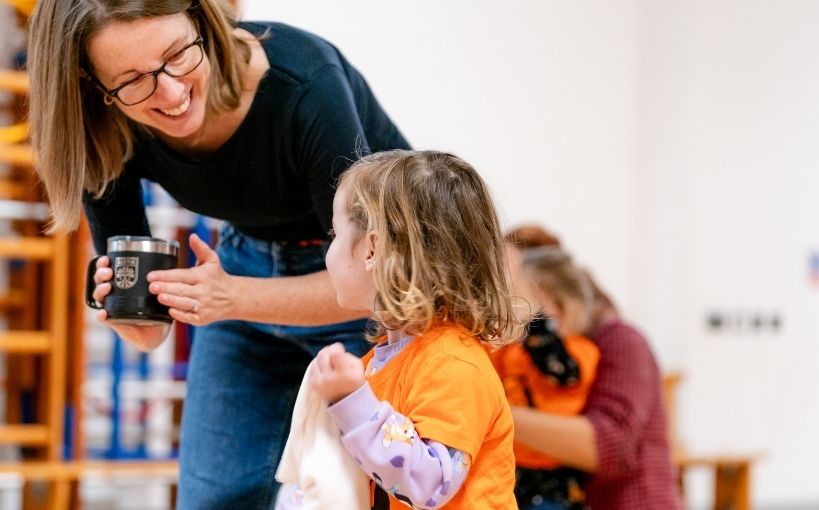
At Stagecoach, our classes are built on a simple but powerful philosophy: there are no wrong answers. Every student is encouraged to explore, to try, and to express themselves without fear of judgement or failure. That’s not just a nice sentiment, it’s the foundation of everything we do. It’s also what makes performing arts for shy children so uniquely well-suited as an environment for growth.Unlike activities where there’s a clear hierarchy of skill or a visible scoreboard, performing arts is inherently subjective and collaborative. A child doesn’t have to be the best singer, the most graceful dancer, or the most dramatic actor to belong. They just have to show up and be themselves, and that, for a shy child, is often the most liberating thing they’ve ever been asked to do. It’s one of the clearest examples of why performing arts is important in children’s development, not just academically or creatively, but emotionally and socially too.
There Are No Wrong Answers
In most school subjects, there is a right answer and a wrong one. In sport, there are winners and losers. These binary outcomes can be particularly difficult for shy children, who are often already highly attuned to how they’re perceived by others. Performing arts removes that pressure entirely. A character can be interpreted in a hundred different ways. A dance move can be modified. A song can be sung softly or boldly. The absence of a single “correct” response means students are free to participate without the fear of getting it wrong, and that freedom is where confidence begins.
The Power of Group Creativity
One of the most underappreciated aspects of performing arts for shy children is that it is, at its core, a team activity. Students work together toward a shared creative goal, a scene, a routine, a performance, and in doing so, they build bonds and develop social confidence without anyone being put on the spot. The connection happens naturally, woven into the work itself. For children who find direct social interaction difficult, this indirect route to friendship and belonging can be genuinely transformative.
Drama Activities for Shy Children: What Actually Happens in Class
If you’ve never been inside a performing arts class, it’s easy to picture something quite formal: children standing in a row, waiting to be assessed, performing solos in front of a panel. The reality is almost nothing like that, particularly at Stagecoach, and particularly in the younger age groups.
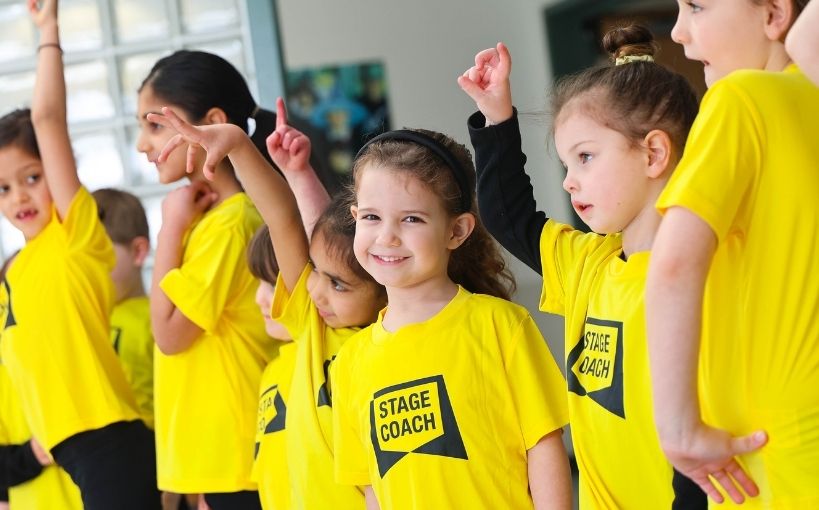
A typical session is warm, structured, and full of energy. Students move between activities, a drama game here, a movement exercise there, a group singing warm-up that gets everyone laughing before they’ve even noticed they’re performing. The atmosphere is collaborative rather than competitive, and teachers are trained to bring out the best in every student as an individual, not just those who are naturally extroverted. This low-pressure, joyful environment is also one of the reasons why the benefits of the performing arts on children’s mental health extend well beyond the stage.
The spotlight is not mandatory on day one. Or week one. Or even month one. Progress in performing arts is gradual and personal, and confidence building activities for shy children are woven into the fabric of every session, not saved for a big reveal at the end of term.
Singing, Dancing, and Acting as Confidence Tools
Each of the three disciplines at the heart of Stagecoach classes contributes something distinct to a shy child’s development.
Singing builds breath control, vocal projection, and, perhaps most importantly, the experience of being heard. For a child who habitually speaks quietly or trails off mid-sentence, learning to fill a room with their voice is quietly transformative. It builds a physical sense of presence that carries into everyday life.
Dancing develops body awareness and non-verbal communication. For children who struggle to express themselves in words, movement offers a different, often more comfortable language. It also builds physical confidence, the sense that your body is capable and coordinated, which has a direct impact on how children carry themselves in social situations.
Acting is where the magic often happens for shy children specifically. Drama activities for shy children use role-play, storytelling, and character work to allow students to step into someone else’s shoes, and in doing so, they often discover parts of themselves they didn’t know were there. Exploring emotions and social situations through the safety of a character is one of the most powerful tools we have for building genuine, lasting confidence.
The Best Activities for Shy Kids by Age: Where to Start
One of the most reassuring things about Stagecoach is that there’s a genuinely appropriate starting point for every child, regardless of age or temperament. Our age-based class structure means that your child will always be among peers at a similar stage of development, socially and creatively. When it comes to the best hobbies for shy kids, that age-appropriateness matters enormously, and nowhere is this more visible than in our youngest groups, where we’ve seen first-hand how performing arts classes boost toddler confidence through play, movement, and imagination rather than performance pressure.
Ages 2–4: Mini Stages (Parent/Carer Accompanied)
For our youngest and most hesitant students, our performing arts classes for 2–4 year-olds, Mini Stages, offer something truly special: a parent or carer stays with their child throughout every session. There’s no separation anxiety, no unfamiliar adult taking over, and no pressure to engage before your child is ready. Sessions are 45 minutes long, play-based, and designed to introduce the joy of creative movement, music, and storytelling in the gentlest possible way. It’s an ideal first step for children who need a familiar face beside them as they begin to find their feet.
Ages 4–6: Early Stages
Our performing arts classes for 4–6 year-olds, Early Stages, are specifically designed for children who are just beginning school, a time when social confidence, communication skills, and the ability to navigate group settings matter enormously. Sessions run for 90 minutes and blend singing, dancing, and acting in a structured but relaxed environment. For children starting to develop their sense of self and their place in a social group, this is one of the most valuable activities for shy kids available. Teachers in this age group are experienced in welcoming new and nervous students, and in making even the quietest child feel seen and celebrated from their very first session.
How to Help a Shy Child Build Confidence Through Performing Arts?
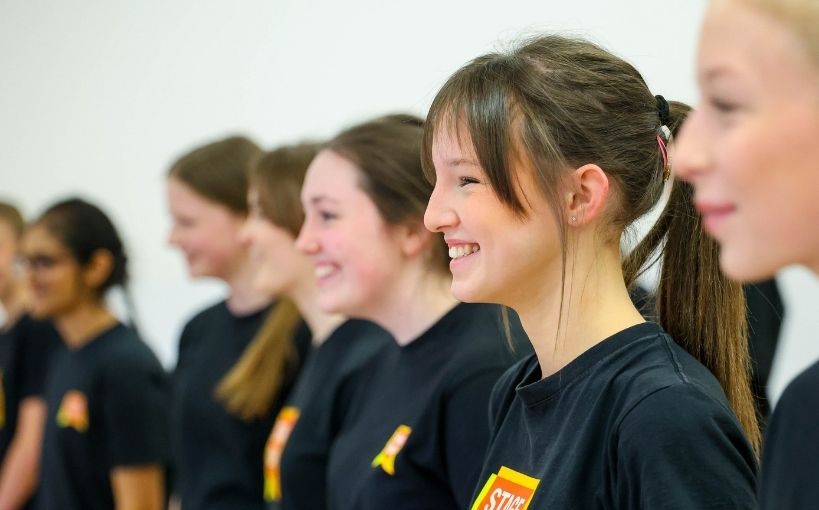
Knowing how to help a shy child build confidence isn’t just about choosing the right activity, it’s also about how you support them around it. The weeks before and after a new class begins are just as important as what happens inside the room.
What to Say Before Their First Class?
The language you use in the days leading up to a first session can make a real difference. Keep it light and low-pressure. Try framing it around fun and curiosity rather than achievement: “We’re going to try something new, there’ll be games and music and you might make some new friends.” Avoid phrases like “You’re going to love it” (which can create pressure to perform happiness) or “Don’t worry, it’ll be fine” (which signals there’s something to worry about). Instead, focus on what they’ll get to do rather than how they’ll feel. Let them know it’s okay to watch for a bit before joining in, and mean it.
It also helps to visit the venue in advance if possible, or look at photos and videos together online. Familiarity with a space reduces anxiety before a child even walks through the door.
What to Expect in the First Few Weeks?
It’s completely normal for a shy child to take several weeks to fully settle into a new environment, and that’s true of performing arts classes just as much as anything else. Some children throw themselves in from session one; others watch carefully from the edges for a while before they feel ready to participate fully. Both responses are valid, and neither means the class isn’t working.
What you’re looking for in those early weeks isn’t necessarily a dramatic transformation. It’s smaller signals: a child who mentions something from class unprompted, who asks to go back, who starts humming a song they learned, or who talks about another student by name. These are the signs that something is taking root, and they matter just as much as any visible leap in confidence. Trust the process, stay consistent, and celebrate every small step forward. The progress, when it comes, is often deeper and more lasting than you’d expect.
FAQs about Hobbies for Shy Children
Are performing arts classes really suitable as hobbies for shy children?
Absolutely, and in many ways, performing arts classes are especially well-suited to shy children. At Stagecoach, no prior experience is needed and there’s no pressure to be “the best in the room.” Our classes are designed to build confidence gradually, through play, creativity, and teamwork, so students grow at their own pace in a warm and welcoming environment.
Won’t being on stage make a shy child feel even more anxious?
It’s a very understandable concern, and one we hear from parents often. The key thing to know is that performing arts for shy children isn’t about pushing them into the spotlight straight away. Progress happens in small, supported steps, through group activities, creative games, and gentle encouragement, long before any kind of performance comes into the picture. The stage, when it does arrive, tends to feel like a natural next step rather than a frightening one.
What confidence building activities for shy children does Stagecoach include in its classes
Our classes blend singing, dancing, and acting in ways that naturally build communication, self-expression, and teamwork. Drama activities for shy children are particularly powerful here, role-play and storytelling allow students to explore emotions and social situations in a safe, creative context. Over time, these experiences translate directly into greater confidence in everyday life, from the classroom to the playground.
How do I know if performing arts is the right fit for my shy child?
The best way to find out is simply to give it a try, and we make that as easy as possible. Many of the children who thrive most in our classes started out as the quietest in the room. Our teachers are trained to nurture every student as an individual, so whether your child is naturally outgoing or needs a little more time to settle in, they’ll always find a place here.
At what age can a shy child start performing arts classes?
We welcome students from as young as two years old. Our Mini Stages classes (ages 2–4) are parent and carer accompanied, making them a wonderfully gentle introduction for very young or hesitant children. Our Early Stages classes (ages 4–6) are specifically designed for children just beginning school, focusing on communication skills, social confidence, and creative play, making them one of the best activities for shy kids at that stage of development.
How is Stagecoach different from a traditional drama or dance school?
Stagecoach isn’t about producing performers, it’s about building people. Our mission, Creative Courage for Life®, reflects everything we do: using the performing arts as a vehicle for lifelong skills including confidence, resilience, creativity, and communication. There are no wrong answers in our classes, no harsh judgements, and no pressure to be perfect. It’s a space where children are free to be themselves.
How long does it take for a shy child to come out of their shell in performing arts classes?
Every child is different, and we’d never put a timeline on it. What we can say is that the environment we create, nurturing, inclusive, and free from judgement, gives shy children the conditions they need to grow. Some students surprise their parents within weeks; for others, it’s a more gradual journey. Either way, every step forward is celebrated, and no child is ever made to feel behind.
Do parents stay with their child during classes?
For our youngest students in Mini Stages (ages 2–4), yes, a parent or carer accompanies their child throughout the session, which can be a real reassurance for both of you. From Early Stages (ages 4–6) onwards, children attend independently, but our teachers are experienced in helping new and nervous students settle in comfortably from their very first session.
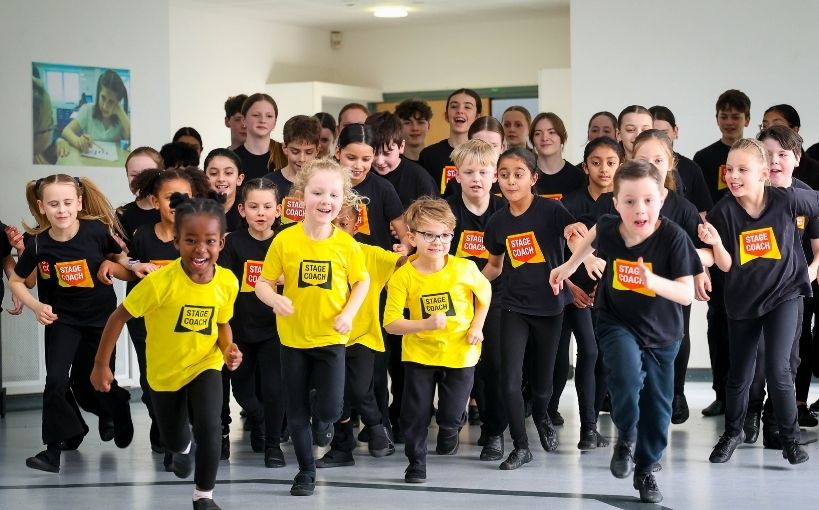
Every Child Deserves a Place to Grow
Your child doesn’t need to love the spotlight to love performing arts. They don’t need to be the loudest in the room, the most confident on the floor, or the first to put their hand up. They just need a space where they’re genuinely welcome, and where growing happens at their own pace, in their own way.That’s exactly what we’ve built at Stagecoach. Whether your child is two or twelve, brand new to creative classes or simply looking for somewhere they can finally feel at home, we’d love to welcome them.
Find your nearest Stagecoach performing arts school and book a trial class today, no experience required, no pressure, just a warm room full of possibility waiting for them.


