
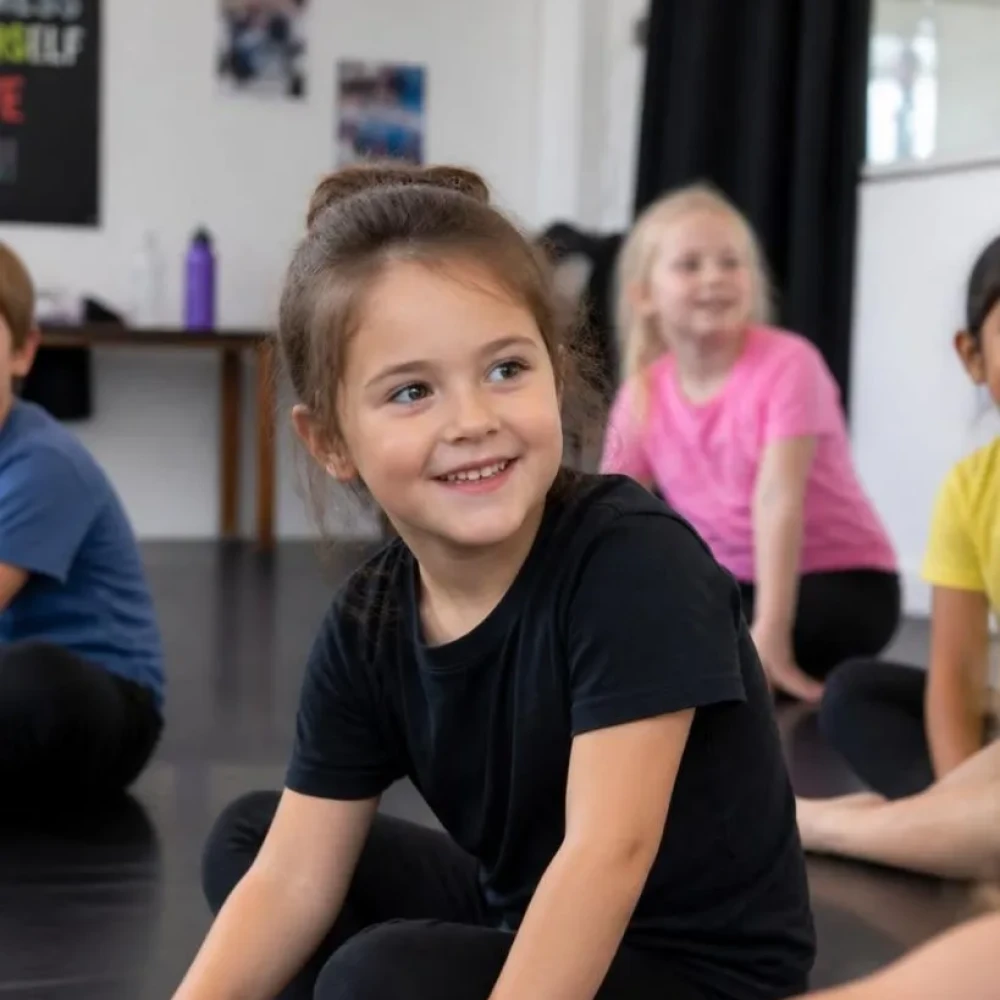
- Confidence & Child Development
How Children Build Confidence Without Pressure (What Actually Works)
Discover why performing arts is one of the best hobbies for shy children, and how Stagecoach helps hesitant kids grow in confidence at their own pace.
Many parents share the same quiet worry: they want their child to grow into a confident, sociable person, but they do not want to push them into something that feels overwhelming or forced. If you have been searching for ways to understand how to build confidence in children without creating pressure, you are in exactly the right place. This article explores what genuinely works, why the environment matters just as much as the activity, and how Stagecoach Performing Arts supports children to find their voice at their own pace.
Key Takeaways
- Confidence grows best in low-pressure, playful environments where children feel safe to try and fail without judgement
- Creative activities such as drama, movement and group singing build social skills gradually and naturally
- Children do not need prior experience or natural talent to benefit from performing arts classes
- Performing arts supports children through key transitions, including starting school and making new friends
- Gentle, consistent exposure over time is far more effective than pushing children into the spotlight before they are ready
- Stagecoach’s Two-Week Trial gives children the chance to explore at their own pace, with no commitment required
Why Pressure Is the Enemy of Confidence in Young Children
There is a common misconception that the best way to help a shy child is to give them a nudge. Encourage them to speak up. Put them in front of an audience. Let them sink or swim. The research into child development tells a very different story.
When children feel safe, supported and free from the fear of getting things wrong, they are far more likely to take risks. That willingness to try something new, to make a mistake and carry on, is the very foundation of confidence. Remove the safety net, and many children will simply stop trying altogether.
Young children are particularly sensitive to perceived judgement. At ages four, five and six, a child’s sense of self is still forming. Experiences that feel high-stakes or competitive at this age can leave a lasting impression, reinforcing the belief that certain things are “not for them.” Pressure-free children’s activities, by contrast, give children the space to discover what they are capable of without the weight of expectation bearing down on them.
What Happens When Children Feel Forced to Perform
Most parents who have tried to coax a reluctant child onto a stage or into a group activity will recognise what happens next. The child freezes, clings, or refuses entirely. This is not defiance; it is a natural stress response.
When a child feels forced into the spotlight before they are ready, the experience can actually deepen their anxiety around that activity. They associate it with discomfort rather than enjoyment, and the barrier to trying again becomes higher, not lower. The goal should never be to override a child’s hesitation, but to create conditions where that hesitation gradually dissolves on its own terms. That takes time, consistency and an environment built on trust.
What Confidence Building Activities Actually Work for Kids
Not all activities are created equal when it comes to building confidence in young children. The most effective ones share a few key qualities: they feel fun rather than pressured, they involve other children, they allow for creative expression, and they repeat regularly enough to build familiarity and trust.
Understanding how to build confidence in children means looking beyond the activity itself and asking what it actually requires of the child. Does it ask them to collaborate? To express themselves? To try something they have not done before, in a setting where getting it wrong is completely fine? Those are the environments where real growth happens.
There are five ways performing arts classes nurture self-belief in young children, from encouraging self-expression to building resilience through creative play, and each one points to the same underlying truth: it is the quality of the experience, not the prestige of the outcome, that makes the difference.
- Why Creative Play Builds More Than Just Creativity
When children engage in imaginative, open-ended play, something important happens beneath the surface. They practise making decisions. They learn to communicate with others. They discover that their ideas have value. These are not just creative outcomes; they are social and emotional ones.
Drama, movement and storytelling give children a structured but playful way to explore the world around them. A child who plays a brave character in a drama exercise is not just pretending. They are rehearsing what bravery feels like, and that rehearsal has real effects on how they carry themselves outside the classroom. Confidence building activities for kids work best when they engage the imagination as much as the body.
- The Role of Repetition and Routine in Building Confidence
One of the most overlooked factors in confidence development is consistency. A single positive experience is wonderful, but it is the accumulation of many positive experiences over time that produces lasting change.
This is why term-time weekly classes are so effective. A child who attends the same group, with the same teacher, in the same welcoming environment, week after week, is building something more than a skill. They are building a relationship with that space, with those people, and with the version of themselves that shows up and participates. Each session compounds the one before it, and over a full term, the cumulative effect can be genuinely transformative.
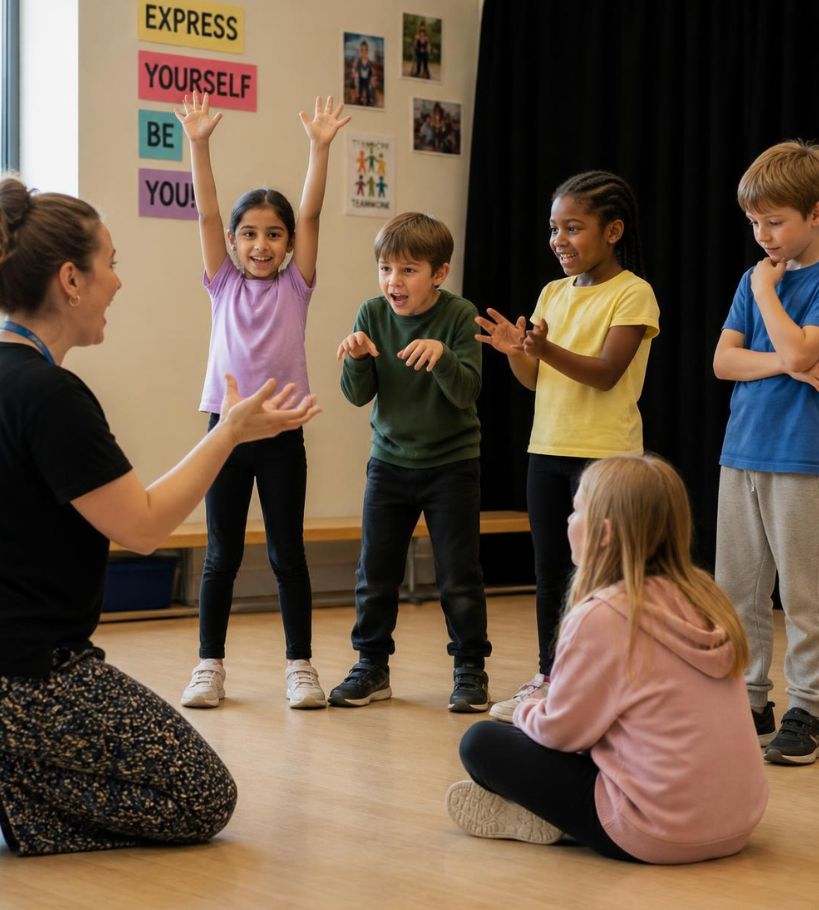
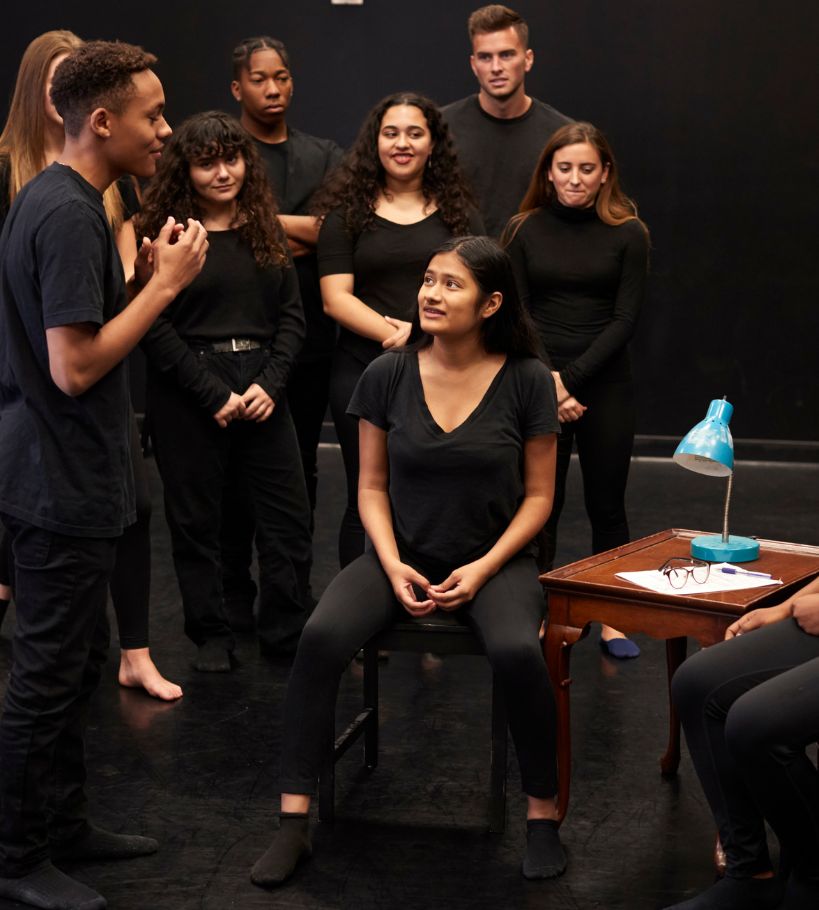
Why Performing Arts Classes Are Particularly Effective for Shy Children
Performing arts classes for shy children might sound counterintuitive at first. Surely the stage is the last place a quiet, anxious child would want to be? But the stage is not really the point. What matters is what happens in the room before anyone gets near a stage.
In a well-run performing arts class, children are invited to participate rather than instructed to perform. They move through activities that build on each other gradually, developing trust in the group and in themselves along the way. Unlike activities that reward only the most outgoing children, weekly performing arts classes that build confidence alongside creativity give every child, including the quieter ones, a genuine role to play.
Stagecoach’s Educational Framework is built around five pillars: Life Skills, Singing, Dancing, Acting, and Performance and Stagecraft. Each pillar contributes to the child’s personal development, not just their stage skills. A child learning to sing in a group is also learning to listen. A child learning a dance routine is also learning to persist through something unfamiliar. A child working through a drama exercise is also learning empathy and communication. The benefits of drama classes for children are woven into every session, even when the children themselves are simply having fun.
Understanding how the performing arts develop resilience and a growth mindset in children helps explain why these activities work even for children who struggle in more competitive environments. Resilience and confidence are closely connected, and both grow in environments where effort is celebrated over outcome. For parents asking how to build confidence in children who are naturally shy or hesitant, performing arts offers something rare: a structured, social setting where the emphasis is always on participation and personal growth rather than polished performance.
- Drama Gives Children a Safe Space to Try Being Someone Else
One of the most powerful tools in a drama class is role play. When a child steps into a character, even briefly, they are given permission to try out a different version of themselves. A child who is quiet in everyday life might discover, through a drama exercise, that they can project their voice, hold a room or make their classmates laugh.
These discoveries matter. They expand a child’s sense of what is possible for them. And because they happen within the protected frame of “it is just a story,” the stakes feel low enough to take the risk. Over time, those moments of discovery accumulate into a broader and more secure sense of self.
- Group Singing and Movement Build Belonging and Communication
There is something uniquely powerful about doing something together. When children sing as a group or move through a choreographed routine side by side, they experience a sense of collective belonging that is difficult to replicate in solo activities.
Group activities require children to listen to each other, to stay in time, to adjust when something does not go to plan. These are not just musical or physical skills; they are social ones. For children who find it hard to connect with peers or who feel anxious in group settings, the shared rhythm of ensemble work can be a genuinely accessible way in. It gives them something to do together, which takes the pressure off the social interaction itself.
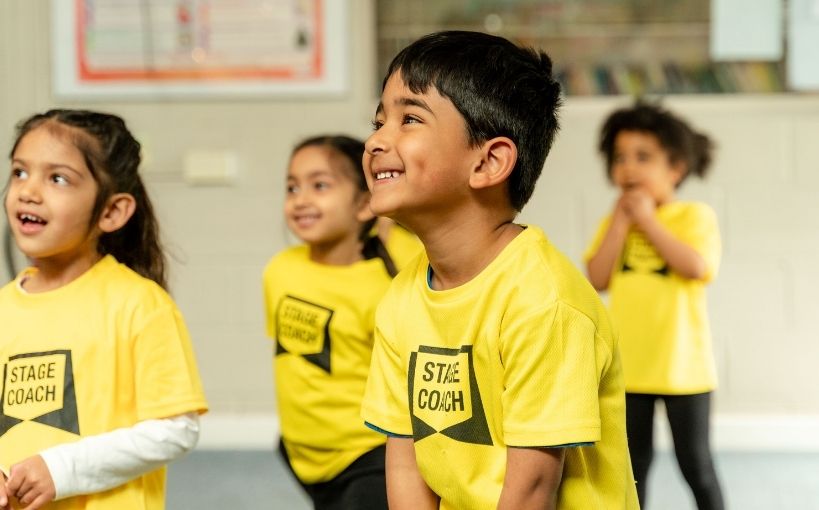
How Stagecoach Helps Children Build Confidence at Their Own Pace
According to Stagecoach Performing Arts, the most effective way to help a child build confidence without forcing them into the spotlight is to create a consistent, nurturing environment where participation is always invited and never demanded. Stagecoach’s approach is built around exactly that principle, and it shapes every aspect of how their classes are designed and delivered.
There are no auditions at Stagecoach. There are no competitive formats, no comparisons between children, and no expectation that a child will perform before they feel genuinely ready. Every programme is age-appropriate, structured around what children at each stage of development actually need, not what looks impressive from the outside.
For children aged four to six, performing arts classes designed for children aged four to six at Stagecoach run for 90 minutes per week, covering singing, dancing and acting in a format that is nurturing, playful and carefully paced. The Early Stages programme is built specifically for children who are navigating the transition to school, many of whom are still finding their feet socially and emotionally.
Stagecoach’s teachers are trained to celebrate effort and participation rather than talent or achievement. The focus is always on the child’s experience, not their output. This is the Creative Courage for Life® philosophy in practice: the performing arts is the vehicle, and personal development, including confidence, resilience, empathy and teamwork, is the destination.
For families with younger children not yet at school age, a gentle introduction to performing arts for younger children is available through the Mini Stages programme, where parents join in alongside their toddlers, making the whole experience feel safe and familiar from the very first session.
The Two-Week Trial is another key part of the Stagecoach approach. Rather than asking families to commit to a full term upfront, Stagecoach invites children to come along and see how they feel. A small deposit of £25 to £50 is taken, which is then deducted from the term fees upon enrolment. It is a low-commitment way to discover whether the environment feels right, and for most children, it takes very little time to relax into the rhythm of the sessions.
What Parents Notice First: Real Signs of Growing Confidence
Confidence does not always announce itself with a grand gesture. For most children, especially those who started out shy or anxious, it shows up in small, everyday moments that are easy to miss if you do not know what to look for.
Parents at Stagecoach often describe noticing changes at home before they see them in the classroom. A child who previously hung back in conversations starts to share their opinions at the dinner table. A child who used to cling at the school gate begins walking in independently. A child who avoided trying anything new starts volunteering to go first.
These are not performance milestones. They are life milestones, and they are the whole point. When a child discovers that they can try something unfamiliar and come out the other side feeling good about themselves, that lesson travels with them into every other area of their life.
Other early signs that parents commonly report include:
- Making a new friend within the first few weeks of classes
- Talking enthusiastically about what they did in the session
- Asking to practise songs or movements at home
- Becoming more willing to try new things outside of class
- Showing greater patience and empathy with siblings or peers
- Speaking up more clearly and confidently in everyday situations
None of these changes happen overnight. But with consistent, positive weekly experiences in a genuinely welcoming environment, they tend to come sooner than most parents expect.
Ready to See the Difference for Yourself?
If you have been wondering whether a nurturing, no-pressure environment could help your child grow in confidence, we would love for you to come and find out together. Every child deserves the chance to discover what they are capable of, in a space where they feel safe, seen and genuinely welcomed.
Our Two-Week Trial is designed for exactly this moment: no long-term commitment, no expectation, just two sessions to see how your child settles in and whether Stagecoach feels like the right fit. Most parents are surprised by how quickly their child takes to it.
Find your nearest school and take the first step towards giving your child the creative courage to thrive.
FAQs about Building Confidence in Children Through Performing Arts
How can I help my child build confidence without forcing them into the spotlight?
The most effective way to build confidence in children is through gentle, repeated exposure to new experiences in a safe and supportive environment. At Stagecoach, children grow at their own pace, joining in when they feel ready rather than being pushed to perform. Over time, the combination of singing, dancing and acting gives children multiple ways to express themselves, so they naturally find their feet without any pressure to stand out. According to Stagecoach’s approach, the key is consistency and warmth, not competition or expectation.
Are performing arts classes suitable for shy children?
Absolutely. Performing arts classes for shy children are actually one of the most effective confidence-building environments available, because the focus is on play, creativity and teamwork rather than individual performance. At Stagecoach, the Early Stages programme (ages 4 to 6) is specifically designed to welcome children who are still finding their voice. There are no auditions, no judgement and no expectation to perform before a child is ready.
What confidence building activities work best for young children?
The best confidence building activities for kids are ones that feel like fun rather than a challenge. Creative activities such as drama, movement and group singing encourage children to communicate, collaborate and try new things in a low-stakes setting. These experiences build social skills, self-expression and resilience over time, which is why performing arts is so well suited to children in the early school years.
What are the benefits of drama classes for children who lack confidence?
The benefits of drama classes for children go well beyond learning to act. Through storytelling, role play and group exercises, children practise listening, empathy and self-expression in a structured but playful way. For children who struggle socially or feel anxious in group settings, drama provides a safe space to try on different roles and build a sense of self without the pressure of getting things right the first time.
At what age should my child start performing arts classes?
Children can start as young as 2 at Stagecoach, with parent-accompanied Mini Stages sessions designed for ages 2 to 4. The Early Stages programme, which runs for 90 minutes per week, is ideal for children aged 4 to 6 and introduces singing, dancing and acting in a nurturing, age-appropriate way. Starting early gives children more time to build confidence gradually, especially during the transition to school.
What if my child is nervous on their first day?
First-day nerves are completely normal, and Stagecoach teachers are experienced in helping children settle in gently. The Two-Week Trial means families can experience Stagecoach before committing to a full term, which takes a lot of pressure off both children and parents. Most children relax quickly once they see how much fun the sessions are, and many form friendships within the first few weeks.
How does Stagecoach avoid putting pressure on children?
Pressure-free children’s activities are central to the Stagecoach philosophy. There are no competitive formats, auditions or comparisons between children. Stagecoach’s Educational Framework is built around personal development first, with the performing arts as the vehicle for growth. Every child progresses at their own pace, and teachers are trained to celebrate effort and participation rather than talent or achievement.
How long does it take for a child to build confidence through performing arts?
Every child is different, and confidence builds at its own pace. Many parents notice small but meaningful changes within the first few weeks, such as a child speaking up more at home, making a new friend or trying something they would previously have avoided. The weekly rhythm of Stagecoach sessions means children benefit from consistent, repeated positive experiences, which is one of the most reliable ways to build lasting confidence over time.
Find Your Local School


