
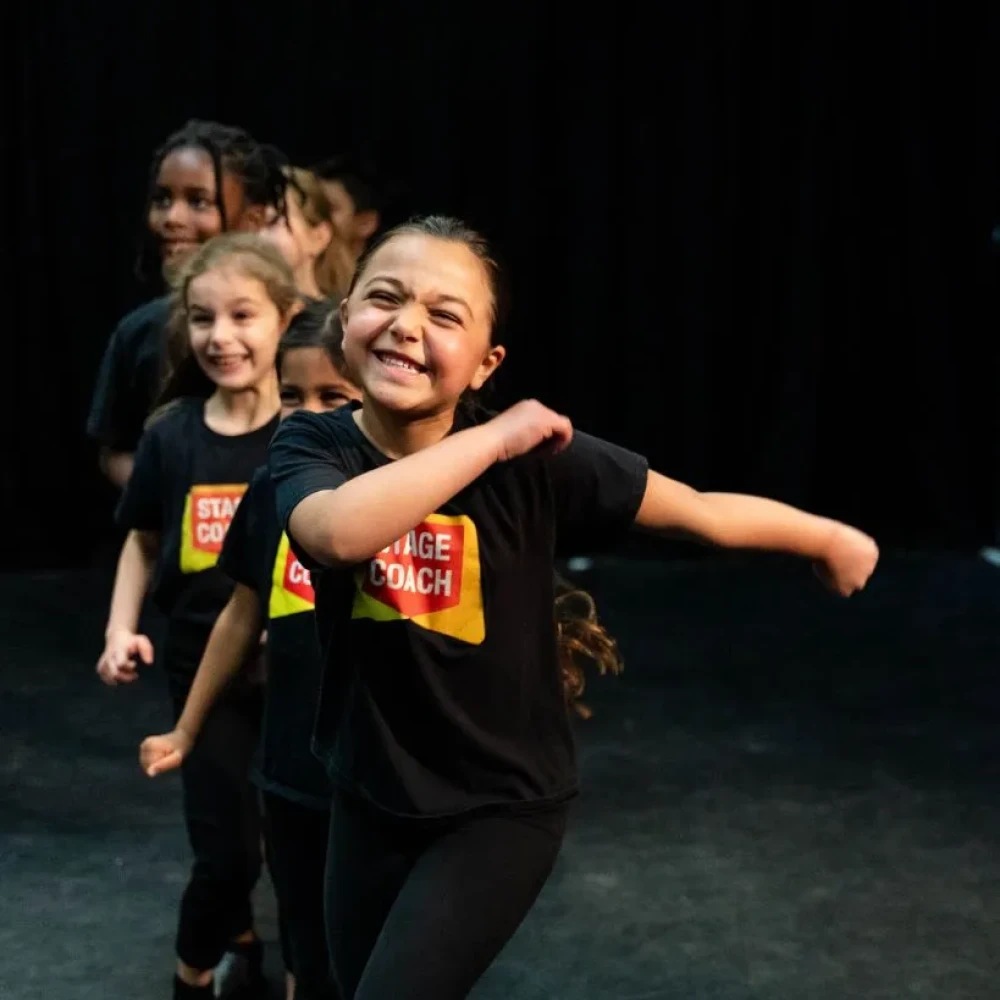
- Confidence & Child Development
The Real Benefits of Creativity for Children: Confidence, Learning, and Communication
Learn how creativity helps children build confidence, communication skills, and resilience, and why creative activities support learning and development.
Most parents want the same thing for their child: to see them grow into someone who feels capable, connected, and comfortable in the world. Academic progress matters, of course, but it’s rarely the whole picture. The benefits of creativity for children reach far beyond what shows up in a school report. Creativity shapes how children think, how they relate to others, and how they begin to understand themselves. Why creative learning matters for kids isn’t just a question for teachers and child development specialists, it’s one every parent finds themselves asking at some point, often when they notice their child holding back, struggling to settle, or searching for a place where they truly belong.
This article explores what creative development actually means, why it matters most in the early years, and what it looks like when it’s working.
Key takeaways
- Creativity supports far more than artistic ability: it builds confidence, communication, resilience, and flexible thinking
- The benefits of creativity for children are especially significant in the early years, when habits of expression and social connection are forming
- Creative learning actively supports school readiness and academic engagement, not just personal development
- Children don’t need to be naturally talented or outgoing to benefit, the right environment meets them exactly where they are
- Performing arts brings together singing, dancing, and acting to deliver the full range of creative developmental benefits in a single, structured weekly session
- The skills children build through creativity carry directly into school, friendships, and everyday life
Why Creativity Is About More Than Making Things
When most people hear the word “creativity,” they picture paintbrushes, craft tables, or perhaps a school play. But creativity in the context of child development is something much broader and more fundamental. It’s the capacity to think flexibly, to imagine possibilities, to express what’s happening on the inside, and to respond to the world with curiosity rather than anxiety.
The importance of creativity in early childhood lies in this wider definition. A child who learns to approach a problem from a different angle, who feels able to voice an idea in a group, or who can sit with uncertainty without shutting down, that child is demonstrating creative thinking in its truest sense. These aren’t soft extras. They are the cognitive and emotional foundations that support everything else.
Creative development also plays a key role in emotional literacy. When children are given space to explore feelings through story, movement, or song, they develop a vocabulary for their inner world that serves them throughout their lives. This is particularly valuable in the early years, when children are still learning to name and navigate their emotions, and when the gap between what they feel and what they can say can be a real source of frustration.
Understanding creativity this way reframes the conversation. It’s not about whether a child is “good at art.” It’s about whether they’re being given the space, the tools, and the encouragement to grow into a confident, curious, communicative person.
How Creativity Builds Confidence in Children
Confidence isn’t something children either have or don’t have. It’s built, gradually, through experience. And creative activities are particularly well suited to building it, because they offer children something rare: a space where there is no single right answer, where trying counts for more than succeeding, and where every contribution has value.
How creativity builds confidence in children comes down to this process of safe, repeated trying. When a child takes on a role in a drama exercise, attempts a new movement in a dance class, or sings in a group for the first time, they are practising the act of putting themselves forward. Each time they do it and find that the world doesn’t end, that they’re supported rather than judged, that something good happens as a result, they build a little more belief in themselves.
For children who are naturally quieter, or who find group settings difficult, this gradual accumulation of positive experience is genuinely transformative. It doesn’t happen overnight. But it does happen.
Why Low-Pressure Creative Environments Make a Difference
For parents whose child struggles to settle into new activities, one of the biggest concerns is that a class might feel overwhelming. Too many children, too much noise, too much expectation. The fear is understandable, and it’s worth taking seriously.
The right creative environment addresses this directly. It isn’t competitive. It doesn’t put children on the spot before they’re ready. It creates a structure that feels safe enough to take small risks within, and it celebrates effort rather than outcome. This is precisely the philosophy behind how Stagecoach teaches students creative courage for life, where the focus is always on nurturing each student’s individual journey rather than measuring them against a standard.
When children feel genuinely safe, they begin to open up. Not all at once, and not on anyone else’s timeline. But the environment makes the difference.
What Confidence Through Creativity Actually Looks Like
Parents often notice the changes before they can quite explain them. A child who used to hang back at the door starts walking in with their bag already off their shoulder. A child who sat quietly in group conversations begins to offer answers, make eye contact, ask questions. A child who needed a parent beside them to feel settled starts waving goodbye without looking back.
These aren’t dramatic transformations. They’re small, consistent shifts that accumulate into something significant. Confidence built through creative activity tends to be durable, because it comes from the inside. It isn’t dependent on praise or performance. It comes from a child’s own growing sense that they are capable, that they belong, and that their voice is worth hearing.
Why Creative Development Is Important in Children’s Learning
Even confident children have friendship bumps. They fall out. They misread each other. They fThere’s sometimes a perception that creative activities and academic learning sit in separate categories, one for fun and one for progress. The reality is quite different. Creative development and academic readiness are deeply connected, and investing in one actively strengthens the other.
Why is creative development important in children’s learning? Because the skills it builds, including flexible thinking, concentration, curiosity, and the ability to listen and respond, are the same skills that help children engage with formal learning. A child who has learned to focus during a story, to follow a sequence of movements, or to work alongside others in a group activity is a child who is better prepared for the demands of a classroom.
The Link Between Creativity and School Readiness
Starting school involves a significant set of social and cognitive adjustments. Children need to manage their attention, take turns, follow instructions, navigate friendships, and cope with the occasional frustration of not immediately understanding something. These aren’t skills that develop automatically. They need to be practised, and creative learning environments offer an ideal context in which to practise them.
Group creative activities, in particular, replicate many of the social dynamics of a classroom in a lower-stakes, more enjoyable setting. A child who has spent time working with others on a shared creative task, who has learned to listen when someone else is speaking and to wait for their moment, is already ahead when it comes to the social demands of school life.
Creativity and the Development of a Growth Mindset
One of the most valuable things a creative environment teaches children is that getting something wrong isn’t the end of the story. In a drama exercise, a wrong turn can become an interesting choice. In a dance class, losing the count is just a reason to find it again. This experience of trying, adjusting, and continuing is the foundation of a growth mindset: the understanding that ability develops through effort, and that challenge is something to engage with rather than avoid.This matters enormously for how children approach learning more broadly. A child who has learned to persist through creative challenges is a child who is more likely to stay curious and engaged when schoolwork becomes difficult. The connection between creative development and long-term academic resilience is well established, and it’s one of the reasons why performing arts is important in children’s development extends well beyond the stage.
How Creativity Improves Communication Skills in Children
Communication is one of the most complex skills a child develops, and one of the most important. It involves not just the ability to speak, but the ability to listen, to read a room, to express what you mean clearly, and to understand what others are trying to say. Creative activities are one of the most effective ways to develop all of these dimensions at once.
How creativity improves communication skills in children is rooted in the nature of creative activity itself. When children engage in storytelling, they practise structuring ideas and conveying meaning. When they sing, they develop control over voice, breath, and expression. When they act, they learn to inhabit a perspective other than their own, which is one of the most powerful ways to develop empathy and social understanding. Each of these activities builds the kind of natural, confident communication that carries into everyday life.
Storytelling, Singing, and Drama: Why These Activities Work
Performing arts are particularly effective for communication development because they engage the whole child: voice, body, imagination, and emotion. A child who learns to project their voice in a singing class is also learning to be heard. A child who takes on a character in a drama exercise is also learning to see the world from another point of view. A child who performs as part of a group is also learning to time their contribution, to respond to others, and to share space.
These aren’t incidental benefits. They are central to what performing arts does, and they are why the combination of singing, dancing, and acting in a single weekly session is so developmentally rich. Each discipline reinforces the others, and together they build a communicative confidence that is both broad and deep.
From the Classroom to the Playground – Communication That Carries Over
The real test of any developmental activity is whether the skills it builds show up in the rest of a child’s life. With creative communication skills, they do. Children who have practised expressing themselves in a structured, supportive environment tend to find it easier to make friends, to join in with groups, to speak up in class, and to navigate the social complexity of playground life.
This transfer happens because the skills are genuinely internalised. A child who has found their voice in a creative setting carries that voice with them. They’ve learned not just what to say, but that it’s worth saying, and that the people around them are worth listening to.
Creative Activities for Children’s Development: What to Look For
With so many activities available for young children, it can be difficult to know which ones will make the most meaningful difference. Not all creative activities are equal in terms of their developmental impact, and it’s worth understanding what to look for when choosing.
Creative activities for children’s development tend to be most effective when they combine several elements: a social dimension that encourages interaction, an expressive element that gives children a voice, an age-appropriate level of challenge that stretches without overwhelming, and a supportive environment where effort is valued over outcome. Activities that tick all of these boxes consistently tend to produce the broadest and most lasting benefits.
What Makes a Creative Activity Developmentally Valuable?
The most developmentally valuable creative activities share a few key characteristics. They involve other children, because social learning is inseparable from personal development at this age. They ask children to express something, whether that’s an emotion, an idea, or a physical response, because expression is how children process and communicate their inner world. They introduce manageable challenges, because growth happens at the edge of comfort, not well inside it. And they are delivered by adults who understand child development and who create an environment of genuine encouragement.
Activities that meet these criteria don’t need to be elaborate. What matters is the quality of the environment and the intentionality behind the structure.
Performing Arts as a Complete Creative Learning Environment
Performing arts stands out among creative activities because it brings together all of the key developmental elements in a single, structured experience. Drama and acting classes for kids develop expressive communication, emotional literacy, and the ability to collaborate and respond in real time. Singing builds vocal confidence and breath control while developing listening skills and musical memory. Dance develops physical coordination, spatial awareness, and the ability to follow and create sequences.When these three disciplines are combined in a single weekly session, the result is a complete creative learning environment that supports the full range of developmental benefits, cognitive, social, emotional, and physical, all at once. For younger children just beginning their creative journey, drama and performing arts classes for ages 2, 3 and 4 offer a gentle, age-appropriate introduction to this kind of structured creative play, building the foundations that will serve children throughout their early years and beyond.
FAQs about Creativity and Child Development
What are the main benefits of creativity for children?
Creative activities help children develop far more than artistic ability. When children are given space to imagine, explore, and express themselves, they build confidence, strengthen communication skills, and learn to work alongside others. At Stagecoach, we see these benefits come to life every week, students who arrive quietly often leave class a little taller, a little bolder, and a lot more themselves.
How does creativity build confidence in children?
Creativity gives children a safe space to try things, make choices, and see their own ideas take shape, and that process is quietly powerful. When a child performs a song, takes on a role, or finds their voice in a group, they’re building a belief in themselves that carries well beyond the studio. This is especially true for younger students who are still finding their feet in social settings.
Why is creative development important in children’s learning?
Creative learning encourages children to think flexibly, ask questions, and approach problems with curiosity rather than anxiety. These are the same skills that help children settle into school, engage with new ideas, and grow into resilient, adaptable learners. Creative development isn’t separate from academic progress, it actively supports it.
How does creativity improve communication skills in children?
When children engage in creative activities, whether that’s storytelling, singing, or acting, they practise expressing themselves clearly and listening to others. Over time, this builds the kind of natural, confident communication that helps children make friends, contribute in class, and feel comfortable speaking up. At Stagecoach, singing, dancing, and acting work together to develop these skills in every session.
What creative activities are best for children’s development?
Activities that combine movement, voice, and imagination tend to have the greatest all-round impact. Performing arts, including singing, dancing, and drama, are particularly effective because they develop physical coordination, emotional expression, and social confidence at the same time. Our Early Stages classes are designed with exactly this in mind, giving children aged 4–6 a structured but joyful space to explore all three.
Why does creative learning matter for young children starting school?
Starting school is a big transition, and creative learning can make it a smoother one. Activities that involve play, storytelling, and group work help children practise the social and emotional skills they need to settle in, taking turns, expressing how they feel, listening to others, and feeling comfortable in a group. These aren’t extras; they’re foundations.
Is creativity important in early childhood, or can it wait until children are older?
The early years are one of the most important windows for creative development. Children between the ages of 2 and 6 are naturally curious and expressive, and nurturing that at this stage helps build habits of confidence and communication that stay with them. Waiting until children are older means missing some of the most receptive years for this kind of growth.
How do performing arts support the benefits of creativity for children?
Performing arts bring creativity to life in a structured, social way. Rather than creating alone, children collaborate, perform, and respond to one another, which means they’re developing teamwork and empathy at the same time as building their own creative voice. It’s one of the most complete forms of creative learning available to young children.
See It for Yourself: Book a Two-Week Trial
Reading about the benefits of creativity for children is one thing. Watching your child light up in a room full of encouraging faces is something else entirely. Our Two-Week Trial is designed for exactly this moment: a low-pressure, no-commitment way to come and see whether Stagecoach feels like the right fit for your child.
There’s no expectation, no audition, and no need for any prior experience. Just two sessions to explore, settle in, and find out what’s possible. If it feels right, we’d love to welcome you properly. If it’s not the right time, that’s completely fine too.
Find your nearest Stagecoach school and book your Two-Week Trial today.


