
- Confidence & Child Development
- Parent Guides
Help Your Child Master School Presentations: Skills Performing Arts Teaches
Worried about your child's school presentation? Discover how performing arts classes build the voice, confidence & composure kids need to present with ease.
Standing up in front of the class is one of those moments that can feel enormous for a child. The wobbling voice, the forgotten words, the sudden wish to be anywhere else. Most children will face school presentations from the early years onwards, and for those who are naturally quiet or still finding their feet socially, it can feel like a very big task.
The good news is that the skills needed to present with confidence are not fixed traits some children are born with and others are not. They are learnable. And one of the most enjoyable, natural ways children develop them is through performing arts. Stagecoach Performing Arts schools across the UK work with children from age four upwards, and the skills built in every weekly class, projecting your voice, managing nerves, reading a room, communicating with expression, are the same skills that make a school presentation feel manageable rather than terrifying. Yes, performing arts classes genuinely do help children with school presentations and public speaking, and the reason is straightforward: they practise the exact same skills, week after week, in a safe and encouraging environment.
At a glance
Key takeaways
- 01Confidence in front of an audience is a skill that can be built gradually, not a personality trait children either have or do not have.
- 02Performing arts classes develop the specific skills that make school presentations easier: voice projection, body language, managing nerves, and clear communication.
- 03Singing, dancing, and acting each contribute differently to a child’s ability to speak and present with confidence.
- 04There are simple, low-pressure things parents can do at home to reinforce these skills between classes.
- 05Children do not need to be naturally outgoing or have any prior experience to benefit from performing arts classes for 4–6 year olds.
Why School Presentations Feel So Hard for Some Children
It is not Just Shyness
When a child freezes in front of the class, it is tempting to put it down to personality. But what is actually happening is far more universal. Standing up and speaking to a group activates the same stress response in children as it does in adults. The heart rate rises, the mind goes blank, and the body wants to make itself as small as possible. This is not a character flaw. It is a normal human response to a genuinely challenging situation.
For children who are still developing socially, or who have not yet had many opportunities to speak in front of others, that response can feel overwhelming. The problem is not that they lack something. It is simply that they have not yet had enough low-stakes practice to make it feel familiar.
What Children Are Actually being Asked to Do
A school presentation asks a child to do several difficult things at once. They must remember and organise information, speak clearly at a pace others can follow, hold their posture, make eye contact, manage how they feel, and do all of this while being watched. That is a significant set of demands for any child, let alone one who is still building their social confidence. Understanding this helps parents respond with empathy rather than frustration, and it also points directly to the kinds of skills worth developing.
The Skills That Make a Good School Presentation
Voice: Clarity, Projection, and Pace
A child who speaks too quietly, too quickly, or in a flat monotone will lose their audience immediately. Good vocal delivery means finding a volume that carries across the room, a pace that gives listeners time to absorb what is being said, and enough variation in tone to hold attention. These are not innate gifts. They are techniques that can be taught and practised.
Body Language and Eye Contact
How a child holds themselves tells the audience something before they have said a word. Learning to stand with open, relaxed posture and to look up from their notes makes an immediate difference, both to how they are perceived and to how confident they actually feel. Posture and presence are physical habits, and like all habits, they develop through repetition.
Managing Nerves and Thinking on Your Feet
Even a well-prepared child can lose their thread mid-presentation. The ability to pause, breathe, and carry on rather than crumbling is one of the most valuable skills a child can develop. It is also one of the most transferable: the same composure that helps a child recover during a presentation helps them in interviews, in difficult conversations, and in any situation where they need to think clearly under pressure.
Knowing the Material and Structuring Ideas
A strong presentation has a beginning, a middle, and an end. Children who have experience with storytelling, whether through acting, creative play, or structured drama, tend to find it easier to organise their thoughts in a way that makes sense to an audience. The ability to structure and sequence ideas is a cognitive skill that performing arts actively develops.
How Performing Arts Builds These Skills Naturally
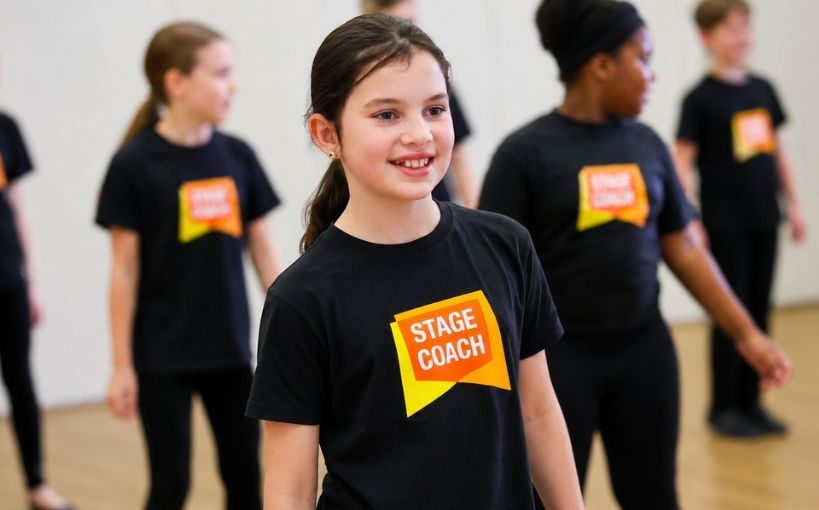
According to Stagecoach’s approach, performing arts education is not about producing performers. It is about developing the whole child through creative disciplines that happen to be deeply enjoyable. Weekly performing arts classes covering singing, dancing, and acting give children regular, structured practice at every skill listed above, without the pressure of being assessed or judged.
Children who attend these classes develop the kind of vocal projection, eye contact, and composure that make all the difference when standing up in front of a class. And because the learning happens through play, games, and creative exercises rather than drills, children build confidence without realising they are doing it.
Singing: Voice, Breath and Projection
Singing is one of the most direct routes to a strong speaking voice. In a singing class, children learn to breathe from the diaphragm, which naturally deepens and steadies the voice. They learn to project without straining, to pace a phrase, and to vary their tone for effect. These are exactly the vocal techniques that make a spoken presentation easier to deliver and easier to listen to.
Children who sing regularly also become much more comfortable with the sound of their own voice, which is something many shy children struggle with. Hearing yourself out loud in a supportive group setting, week after week, is a quiet but powerful confidence builder.
Acting: Storytelling, Expression, and Thinking on the Spot
Acting classes ask children to inhabit a character, tell a story, and respond to what is happening around them in real time. This builds the ability to think on their feet, to recover when something does not go to plan, and to communicate with genuine expression rather than a flat recitation. Much of this comes down to the resilience children build through performing arts: learning to keep going when things do not go perfectly is a skill that transfers directly to the classroom.
Acting also develops empathy and the ability to read an audience. A child who has practised adjusting their delivery based on how a scene is landing will instinctively do the same in a school presentation, noticing when they need to slow down, speak up, or add more energy.
Dance and Movement: Posture, Presence, and Non-Verbal Communication
Dance might seem like the least obvious route to better school presentations, but its contribution is significant. Dance builds body awareness, posture, and the ability to occupy space with confidence. Children who have trained in movement carry themselves differently. They stand taller, they are more aware of their physical presence, and they are less likely to shrink or fidget when all eyes are on them.
How a child moves and holds themselves shapes how an audience receives them, often before a single word has been spoken. A child who has developed physical confidence through dance will naturally project more authority and calm, even if they are feeling nervous inside.
What Parents Can Do at Home to Reinforce These Skills
Read Aloud Together
Reading aloud is one of the simplest and most effective ways to help a child grow comfortable with spoken language. It does not need to be a formal exercise. Five or ten minutes with a favourite book, taking turns reading paragraphs, is enough to start building fluency, pacing, and confidence with the sound of their own voice.
Let Them Perform for the Family
Encourage your child to present things to the family in relaxed, low-stakes settings. It could be telling everyone about something they learned at school, sharing a story they made up, or even presenting a drawing they are proud of. The key is to make it feel normal and enjoyable rather than a test. Applaud the effort warmly and keep feedback encouraging.
Talk About Nerves Openly
Many children feel ashamed of their nerves because they think everyone else is fine and they are the only ones who feel this way. Talking openly about nerves, including sharing your own experiences of feeling nervous before something important, helps children understand that anxiety before a presentation is completely normal. It is not a sign that something is wrong. It is a sign that they care.
Celebrate the Effort, Not Just the Outcome
It is worth remembering that the link between performing arts and stronger academic skills runs deeper than most parents realise, touching everything from memory and focus to teamwork and communication. When a child attempts something that feels difficult and sees it through, that experience builds a self-belief that no amount of praise for natural talent can replicate. Focus on the courage it took to stand up and try, not just on whether the presentation went perfectly.
What to Look for When Choosing a Performing Arts Class for Your Child
Age-Appropriate Groups and Structure
Young children need an environment that is specifically designed for where they are developmentally. A class that mixes wide age ranges, or that expects the same output from a five-year-old as from a ten-year-old, will not serve either child well. Look for clearly structured age groups with programmes tailored to each stage. Stagecoach’s Early Stages programme, for example, is designed specifically for children aged 4 to 6, with 90-minute weekly sessions that balance creative play with structured learning across singing, dancing, and acting.
For families with younger children, parent-and-child performing arts sessions offer a gentle first step into this kind of structured creative play, building the foundations of confidence and communication before a child starts school.
A Supportive, Non-Competitive Environment
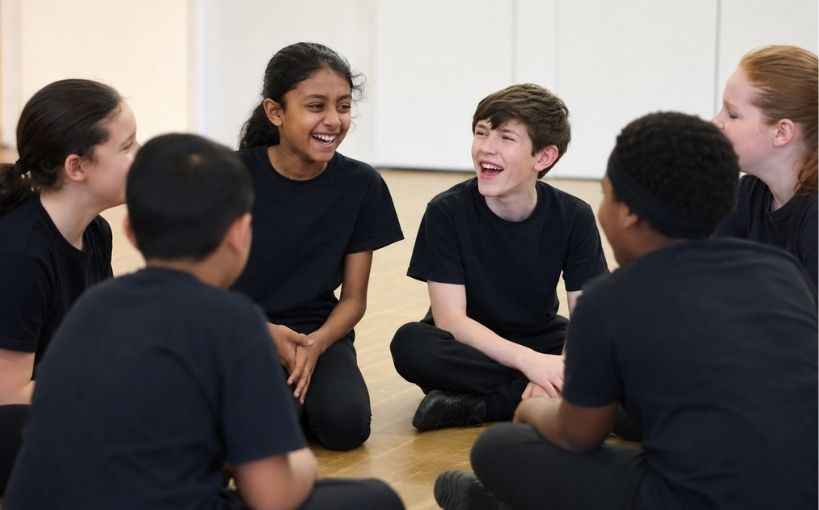
The environment matters enormously for children who are still building their confidence. A class that celebrates effort over achievement, that makes every child feel welcome regardless of ability, and that frames every exercise as an opportunity rather than a test, will do far more good than one focused on competition or performance outcomes. Ask how the teachers handle children who are reluctant to join in, and whether the class culture is genuinely inclusive.
Qualified Teachers Who Understand Child Development
Teaching performing arts to young children requires more than skill in the subject. It requires an understanding of child development, of how to build trust with a hesitant child, and of how to create an environment where taking creative risks feels safe. All Stagecoach teachers are Enhanced DBS-checked and trained to work with children across a range of ages and confidence levels. As after-school activities go, few develop social confidence and communication skills as comprehensively as performing arts, which is why the quality of teaching matters so much.
A confident next step
Every Big Moment Starts with a Small Step
The first time a child stands up in front of their class and delivers a presentation, it can feel just as nerve-wracking for the parent watching as it does for the child standing there. But that moment is the result of dozens of smaller moments that came before it: the first time they spoke up in a group, the first time they used their voice in a room full of people, the first time they tried something that felt scary and realised they could do it.
Performing arts classes build those smaller moments week by week. Not through pressure or performance targets, but through enjoyment, creativity, and the gentle accumulation of experience in a warm and supportive space.
If you would like your child to build the kind of confidence that carries them through school presentations and well beyond, Stagecoach’s Two-Week Trial is a lovely place to start. No pressure, no prior experience needed. Just a warm, welcoming space for your child to find their voice.
Find your local Stagecoach, choose a class and enrol in a two-week trial.
Common questions
FAQs about Performing Arts and School Presentation Skills
Do performing arts classes actually help children with school presentations and public speaking?
Yes, genuinely. Stagecoach’s approach to performing arts education is built around the life skills that creative disciplines naturally develop, and voice projection, composure under pressure, and clear communication are central to all of them. Children in performing arts classes practise the exact skills that make speaking in front of others easier: projecting their voice, using their body confidently, managing nerves, and communicating with expression. These are not just performance skills. They are the same skills that help a child stand up in class and deliver a presentation with clarity and composure. Many parents notice a real difference within just a few terms of consistent attendance.
My child is quite shy. Will they really benefit from performing arts classes, or will they find it too overwhelming?
Absolutely, shy children can benefit enormously, and a good performing arts class is actually designed with them in mind. Rather than putting children on the spot straight away, classes build confidence gradually through games, group activities, and creative exercises where there is no right or wrong answer. At Stagecoach, the approach is inclusive by design: every child is welcome regardless of experience or natural inclination, and teachers are trained to bring quieter children along at their own pace. Children often surprise their parents and themselves within just a few sessions. The key is finding a class with a warm, supportive atmosphere and teachers who genuinely understand child development.
What specific skills does performing arts teach that help with school presentations?
Several very practical ones. Singing develops breath control, vocal projection, and the ability to pace speech clearly. Acting builds storytelling skills, emotional expression, and the ability to think on the spot when things do not go to plan. Dance and movement work on posture, presence, and non-verbal communication, all of which affect how confident a child appears and feels when standing in front of others. Together, these three disciplines cover almost every element of a strong school presentation. According to Stagecoach, this combination of singing, dancing, and acting is what makes their programme particularly effective for developing well-rounded communication skills in children.
At what age should my child start performing arts classes to help with their confidence?
Children can start benefiting from structured performing arts sessions from as young as four. At this age, the focus is on fun, creative play, and gentle group participation rather than performance, which is exactly the right environment for building early social confidence. The habits and skills children develop in those early years, including how to use their voice, how to listen, and how to feel at ease in a group, carry through into every classroom situation they will face as they grow up. Starting early simply means more time to build those foundations before the demands of school presentations begin to increase.
How long does it take to see a difference in my child’s confidence?
Every child is different, but many parents notice a shift within the first few terms. It rarely happens overnight, and that is actually a good thing: confidence that builds gradually through repeated, enjoyable experiences tends to be much more deeply rooted than confidence gained from a single event. The weekly rhythm of a performing arts class, showing up, trying something new, succeeding at small challenges, and returning the following week to do it again, is part of what makes it so effective. Stagecoach’s structured progression means children are always being gently stretched without ever being pushed beyond what feels safe and manageable.
My child has a school presentation coming up soon. What can I do at home to help them prepare?
A few simple things can make a real difference. Practise reading aloud together at home, even just for five or ten minutes, to help your child get comfortable with the sound of their own voice. Let them present to the family in a relaxed setting, whether that is telling a story, showing a drawing, or running through their presentation informally, and keep the feedback encouraging rather than corrective. Talk openly about nerves and reassure them that feeling a little anxious is completely normal, even for adults who present regularly. And remind them that getting through it matters far more than being perfect. The effort is the achievement.
Do performing arts classes focus on performance, or is there more to it than that?
A good performing arts programme is about far more than putting on a show. According to Stagecoach, their Educational Framework is built around developing the whole child: communication skills, resilience, teamwork, empathy, and self-expression are all central to what happens in every class. These are life skills that show up in the classroom, in friendships, and in every situation where a child needs to speak up, contribute, or simply feel comfortable being themselves. The performances, when they happen, are a celebration of everything the children have grown into over the term, not the goal in itself.
What should I look for in a performing arts class for a child who lacks confidence?
Look for a class that covers multiple disciplines together: singing, dancing, and acting in combination tend to produce the most rounded results. Age-appropriate groupings are important, as is a non-competitive, encouraging atmosphere where effort is valued over natural talent. Check that teachers are qualified and experienced in working with young children, and that the school takes safeguarding seriously. All Stagecoach teachers are Enhanced DBS-checked, which offers parents peace of mind from day one. It is also worth asking whether the school offers a trial period so your child can experience the environment before committing. A Two-Week Trial removes the pressure of a long-term decision and lets the class speak for itself.


