
- Confidence & Child Development
- Parent Guides
Saturday-Morning Toddler Activities: A Practical Guide to Your Weekend Options
Saturday mornings with a toddler are full of possibility, and full of decisions. Do you head to soft play and hope for the best? Sign up for that music group a friend recommended? Try the library storytime you keep seeing on the noticeboard? With so many toddler activities on offer at weekends, it can feel harder than it should be to pick one that fits your child, your schedule and your sanity. For creative children aged around two to five, activities that involve imagination, movement and making noise together tend to work particularly well at this age, when imaginative play is at its peak and curiosity runs ahead of attention spans.
This guide walks through the most popular options for children aged roughly two to five, comparing them on the things that actually matter to parents: whether you stay or drop off, how much energy your child needs to bring, how social the setup is, and what the rest of the morning looks like once the class is done. No hard sell, just a genuinely useful comparison so you can find the right fit for your family.
At a glance
Key takeaways
- 01Most toddler weekend activities fall into two camps: stay-and-join (you are in the room) or structured drop-off classes. Knowing which suits your child matters more than which activity you choose.
- 02Energy level varies significantly across options. Soft play and baby gym are high-energy and physically led; music groups and storytime are calm and seated; performing arts classes sit comfortably in the middle.
- 03Social dynamics differ too: some sessions involve free-flowing group play, others are structured activities where children participate alongside peers rather than with them in a directed way.
- 04The activity that fits best often depends on nap schedules, post-class hunger and how your toddler handles transitions, which are practical factors that are easy to overlook when booking.
- 05Trying before committing is almost always an option. Most providers offer taster or trial sessions before you sign up to a full term.
What to Think About Before You Book?
Before comparing individual activities, it helps to get clear on a few practical things specific to your family. The "best" option looks very different depending on your toddler’s temperament, your Saturday morning rhythm, and how much flexibility you actually have.
Stay-and-join vs. structured drop-off
For most children under three, drop-off is not yet on the table, and that is completely fine. Many of the best classes for toddlers in this age bracket are designed with parents in the room as active participants, not just spectators. This is a feature, not a limitation. For children who are naturally cautious or need time to warm up, the ability to join in from your lap or beside you makes the difference between a child who engages and one who shuts down. As children approach four and five, many providers introduce a gradual separation process, but a good class will never rush this.
How much energy does your toddler have on a Saturday morning?
Some toddlers wake up at full throttle. Others need twenty minutes and a banana before they are ready to interact with the world. High-energy children tend to do best with activities that give them a physical outlet early, while calmer or younger toddlers often respond better to low-stimulation, predictable formats. Think honestly about what your child is like at the time the class runs, not what you hope they might be like.
Is your child ready for a group setting?
Group activities ask toddlers to share space, wait their turn, follow instructions from an unfamiliar adult, and manage the noise and movement of other children nearby. That is a significant amount to ask of a two-year-old. Indoor toddler activities on rainy Saturday mornings can feel overwhelming in larger settings, particularly for children who are still finding their feet socially. Smaller, consistent groups, where the same children come back each week, make it much easier for toddlers to relax and participate.
Nap times, snack times and the rest of the morning
A class that runs from 10:00 to 10:45 might sound perfect until you realise it lands directly over your child’s second sleep window, or that by 11:00 they are running on empty and need lunch immediately. The activity itself is only part of the equation. What happens before it, and what you plan for after, shapes whether the morning feels manageable or like a military operation. It is worth mapping out your usual Saturday rhythm before you book anything.
The Main Options, Compared
Here is a straightforward look at the most common toddler activities available on Saturday mornings across the UK, assessed on the factors that tend to matter most in practice.
Soft Play
Soft play centres are a genuine institution in British toddler life, and for good reason. They are mostly self-directed, physically engaging, and reasonably easy for parents in terms of supervision intensity once your child is old enough to explore independently. Most centres are structured as drop-in or pay-on-the-day, which makes them flexible. The social setup is essentially parallel play: children play near other children, but rarely with them in a structured way. Post-session, most toddlers leave tired, hungry, and ready for a nap, which is often exactly what the rest of the morning calls for. The downside is that it does not build on itself week to week. It is the same experience each time, and for parents, it can feel somewhat passive.
Baby Gym and Toddler Gymnastics
Baby gym classes typically follow a structured, instructor-led format with equipment circuits, balancing activities, and age-appropriate challenges. Energy level is moderate to high, and for children aged two and above, these sessions tend to be very popular because they offer a genuine physical challenge in a safe, guided environment. Most sessions for under-threes involve parents throughout; older toddlers may begin to participate more independently as the term progresses. Group sizes are usually kept small, and the turn-based format helps children begin to understand waiting and watching. Post-session tiredness is common, so pairing it with a mid-morning snack before heading home tends to work well.
Music and Singing Groups
For younger toddlers or those who are shy or sensitive to stimulation, music groups are often a brilliant starting point. Sessions are typically calm, seated or lightly active, and involve group singing, simple instruments and rhythm-based activities. The format is predictable and repetitive in a way that young children find genuinely reassuring. Social pressure is low: children participate in parallel, all doing the same thing at the same time, rather than being expected to interact one-to-one with peers they may not know. Post-session, children tend to leave relaxed rather than wired, which makes music groups a good choice for younger toddlers whose nap window falls later in the morning.
Library Storytime
Free, accessible and wonderfully low-key, library storytime sessions run across the UK and are typically open to children from around eighteen months upwards. They are entirely parent-accompanied, gentle in pace, and focused on listening, language and the pleasure of books. Social interaction between children is minimal; the experience is more about shared attention than peer connection. For book-loving children, or for weeks when you want a gentler Saturday morning without the logistics of a formal class, storytime is a genuinely good option. The limitation is that it does not really develop over time; each session is standalone rather than cumulative.
Performing Arts and Drama Classes
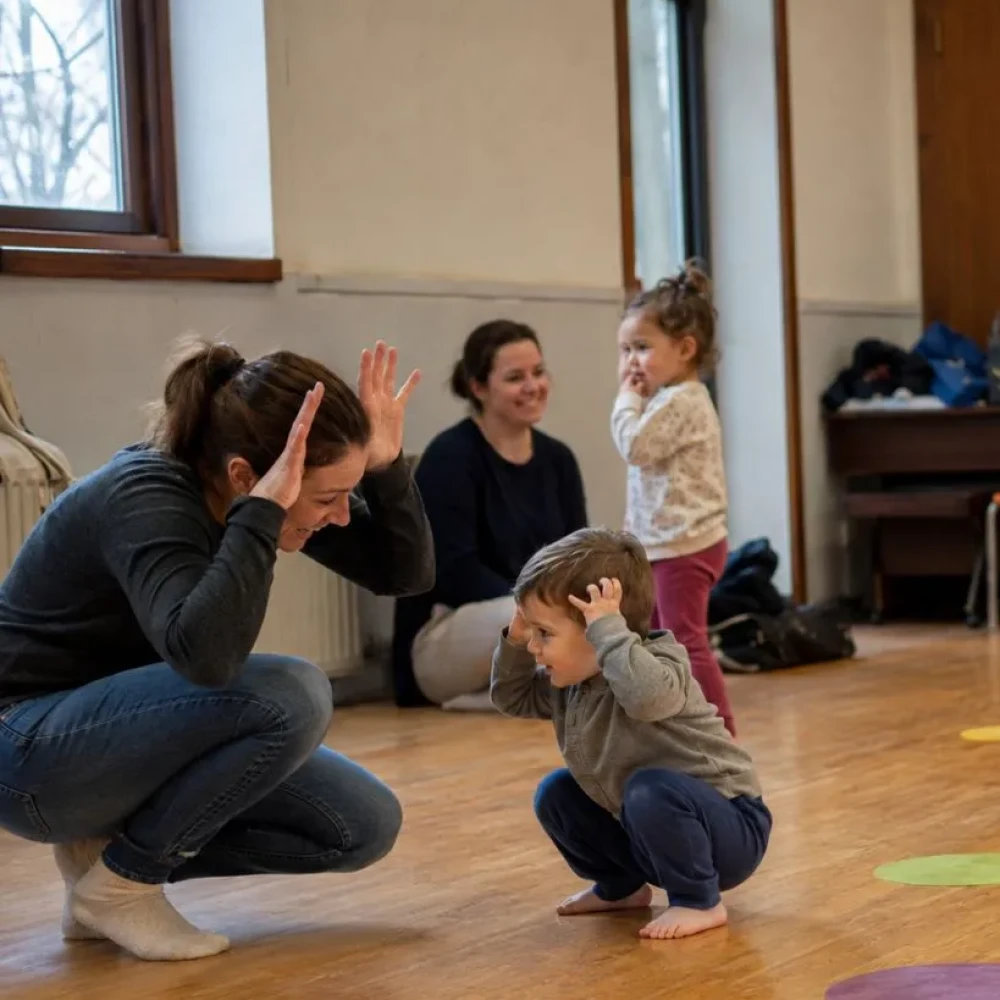
Structured weekly performing arts classes for 2–4 year-olds at Stagecoach combine singing, movement and imaginative play in a single 45-minute session. For the youngest age group, parents stay in the room throughout, which removes the pressure of separation entirely. The social setup is small groups with a consistent register each week, meaning children see the same faces term after term. Familiarity builds gradually, and with it, confidence. Energy level is moderate: active and engaging, but not physically exhausting.
For children who love pretending, making noise and doing things with their whole body, performing arts sessions tend to land particularly well, especially around ages three to five when imaginative play is at its absolute peak. Activities that combine singing, movement and imaginative storytelling are among the best weekend activities for creative 3-year-olds, channelling that energy into something structured and social without the pressure of performance. Post-session, children often leave animated and chatty; it pairs well with lunch or a lunchtime nap rather than needing an immediate wind-down.
Unlike a one-off craft session, structured performing arts classes for children offer a repeating weekly routine that builds familiarity, friendships and skills across a full term. That accumulative quality is something that open-access or drop-in activities simply cannot replicate.
Toddler Swimming Lessons
Swimming lessons occupy a slightly different category from the others here because they involve a venue-specific commitment and often a separate changing room logistics challenge. For under-threes, most providers require a parent in the water throughout the session. Energy expenditure is moderate, but post-session fatigue is common, particularly for younger children whose bodies work hard in the water even during a short lesson. Group sizes are typically small and instructor-led. The progressive nature of swimming lessons is a genuine strength: children move through levels over time, which gives a clear sense of development. The main practical consideration is the post-session snack and warmth window; most toddlers are hungry and chilly immediately afterwards, so having a plan for that tends to make the whole morning easier.
A Quick Side-by-Side
| Activity | Typical Age | Stay-with or Drop-off | Energy Level | Social Setup | Best Post-Session |
|---|---|---|---|---|---|
| Soft play | 18 months+ | Stay-with (under 3) | High | Free/parallel play | Nap or lunch |
| Baby gym | 6 months–5 yrs | Stay-with (under 3) | Moderate–high | Small group, turn-based | Snack, then free play |
| Music group | 6 months–4 yrs | Stay-with throughout | Low–moderate | Parallel group activity | Nap (younger toddlers) |
| Library storytime | 18 months+ | Stay-with throughout | Low | Listening together | Calm activity at home |
| Performing arts | 2–4 yrs | Stay-with (under 4) | Moderate | Small consistent group | Lunch or lunchtime nap |
| Swimming lessons | 6 months+ | Stay-with (under 3) | Moderate | Small instructor-led | Snack and warmth |
How to Choose the Right One for Your Child (and Your Saturday)?
Once you know what the different formats look and feel like in practice, choosing becomes much more straightforward. A few common scenarios:
If your toddler is shy or slow to warm up
Look for sessions where you stay in the room throughout, with smaller, consistent group sizes. The combination of familiar faces week after week and a parent nearby to offer reassurance makes a real difference for children who need time to settle. Music groups and performing arts classes for the youngest age groups are both strong here. The key is not to rush the process; even watching from your lap is a perfectly valid starting point, and a good provider will support that without pressure.
If your toddler has high energy and needs an outlet
Baby gym, soft play or a movement-based performing arts session are all worth considering. The priority here is giving the energy somewhere to go early in the morning, before the day’s demands stack up. Whichever you choose, pairing it with a substantial snack afterwards tends to smooth out the rest of the morning significantly.
If your Saturday morning is tightly scheduled around naps
This is perhaps the most underestimated factor. Music groups and performing arts sessions for younger toddlers typically run for 45 minutes to an hour, which fits neatly into the window between a morning nap and lunchtime for many families. Swimming and baby gym tend to take longer once you factor in changing and post-session recovery time. Build in at least twenty minutes of buffer either side of any class to avoid the morning unravelling.
If you want something that builds on itself week to week
The most important distinction here is between drop-in and term-based provision. Drop-in activities like soft play and library storytime offer flexibility, but they reset each time. Structured term-based classes, where children attend the same session with the same group and the same leader, develop over time in a way that standalone sessions cannot. The ripple effect of that consistency is real: how one parent used Saturday classes to prepare her toddler for school is a good illustration of how a Saturday morning habit, chosen thoughtfully, builds into something genuinely meaningful by the time a child starts reception.
For children on the cusp of starting school, weekly performing arts sessions for 4–6 year-olds introduce singing, dancing and acting alongside the social skills that really matter when the classroom door opens: listening to instructions, taking turns, managing nerves in front of a group, and making friends in a new setting.
Once you know what type of session suits your child, searching for toddler activities near me will bring up a range of local providers. Use the comparison above to filter your options rather than simply going with the nearest or cheapest; the format matters as much as the location.
Find what is available near you
Ready to Try Something This Saturday?
Finding the right Saturday morning activity is often a process of one or two attempts rather than a single inspired decision, and that is completely normal. Most good providers know that, which is why the majority offer some form of trial or taster session before you commit to a full term.
If performing arts sounds like the right fit for your family, Stagecoach’s Mini Stages classes offer a Two-Week Trial for just £15, so you and your child can experience a real session without committing to a full term. Sessions are led by Enhanced DBS-checked teachers, run for 45 minutes, and parents stay in the room throughout for the youngest age group. There is no audition, no prior experience needed, and no expectation that your child will do anything other than give it a go at their own pace.
There is a reason so many families keep coming back: five ways performing arts builds confidence in toddlers points to benefits that go well beyond learning a song, but you will see them in action long before you read about them.
Find a Mini Stages Class near youUseful answers
FAQs about Toddler Activities
What are the best weekend activities for creative 3-year-olds?
For creative 3-year-olds, activities that involve imagination, movement and making noise together tend to work brilliantly. Performing arts classes, music groups and movement-based sessions are all strong options at this age because they channel creative energy into something structured and social. Stagecoach’s performing arts sessions combine singing, dancing and imaginative play in a way that suits children who love pretending, storytelling and doing things with their whole body. Most providers offer trial sessions, so it is worth trying a couple to see which one your child truly lights up in. Stagecoach’s Mini Stages classes, designed specifically for 2–4 year-olds, are built around exactly this developmental stage.
What toddler activities are good for shy or clingy children?
If your toddler takes a while to warm up, look for sessions where you stay in the room with them throughout, rather than drop-off formats. Smaller, consistent group sizes also make a significant difference, as does the repetition of a regular weekly session: activities where the same children and the same adult lead the class each time give shy children the familiarity they need to gradually feel safe and begin to participate. Music groups, library storytime and performing arts classes for younger toddlers, where parents join in as a matter of course, tend to work well for exactly this reason. The key is not to rush the process. Even sitting on your lap and watching is a perfectly valid starting point, and a good provider will recognise that and work with it rather than pushing for premature independence.
At what age can toddlers start attending classes on their own?
This varies by activity and provider, but as a general rule most structured classes for toddlers aged 2 to 4 are designed for children to attend with a parent or carer present. Drop-off formats typically begin from around age 4 to 5, depending on the child and the setting. If your toddler is not quite ready to separate, that is completely normal. Many children need a full term, or more, of parent-accompanied sessions before they feel confident participating independently in a group. A good provider will never rush this process, and the best ones actively build the transition gradually over time rather than treating it as a threshold to be crossed at a fixed point.
How do I find toddler classes or activities near me?
A quick search for toddler activities near me or toddler classes in your town is a good starting point, but it helps to filter by what you are actually looking for. Think about: the age range catered for, whether parents stay or drop off, the day and time (and whether it fits around naps and mealtimes), and whether the provider offers a trial before you commit to a full term. Local Facebook parent groups, school noticeboards and children’s centre listings are also reliable sources of genuinely tried-and-tested options in your area.
Is soft play good for toddlers, or are structured classes better?
Both have their place, and they serve genuinely different purposes. Soft play is brilliant for burning off physical energy and free-range exploration, but it is largely unstructured: toddlers play near other children rather than with them, and there is limited adult guidance involved beyond supervision. Structured classes offer consistency, skill-building over time and a social dynamic that develops week on week as children become familiar with each other and the format. For many families, a mix of both across the week works well. If you are specifically looking for something that builds on itself and contributes to your child’s development in a more intentional way, a weekly structured class is the stronger choice.
What should I look for in a toddler class to make sure it is safe?
Any reputable provider of toddler classes should be able to tell you clearly how staff are vetted (Enhanced DBS checks are the minimum standard in the UK), what the adult-to-child ratio is, how they handle safeguarding concerns, and whether they carry appropriate insurance. It is also worth asking whether the venue has been risk-assessed for the age group specifically. For younger toddlers, check that the environment is genuinely designed for under-fives rather than simply adapted from an older-child setting. At Stagecoach, all teachers hold Enhanced DBS certification as standard, and safeguarding is built into the training and operational framework across every school.
How do I know if a toddler activity is worth the cost?
A few things are worth weighing up honestly. Does your child actually enjoy it, and do they respond positively when you tell them it is time to go? Does the session feel well-organised and led by someone who clearly understands how to work with young children? Is there a structured approach that means your child is developing something, even if it does not look like formal learning from the outside? And practically: does the time, location and cost fit into your family’s life without adding stress to an already busy morning? Most good providers offer a trial session or taster class before you commit to a full term, which is by far the best way to find out whether it is right for your child. If your toddler leaves buzzing and asks to go back the following week, that is usually the only answer you need.


