
- Parent Guides
What to Look for in a Kids’ Club: Safety, Confidence and Fun
Looking for a kids' club that builds confidence? Discover what to look for in a safe, supportive environment for shy or sensitive children.
Choosing a kids’ club for a shy or sensitive child is one of those decisions that feels much bigger than it probably should. There are so many options available, and when your child struggles with new environments or group settings, the stakes feel higher. You are not just looking for something to fill an afternoon. You are looking for a place where your child can grow. Knowing how to build confidence in children is something the best kids’ clubs understand deeply, and it shapes everything from how teachers are trained to how the first session is structured. The right environment does not just entertain. It transforms.
This article walks through exactly what to look for, what questions to ask, and why the activity matters far less than the culture surrounding it.
Key Takeaways
- “Safety” in a children’s activity means emotional safety as well as physical: no singling out, no performance pressure, no child left feeling “behind”
- Shy and sensitive children thrive in low-pressure, play-based environments where encouragement replaces competition
- Performing arts is one of the most research-supported activities for building communication skills, self-belief, and resilience in young children
- The right kids’ club helps children grow in confidence at school, in friendships, and in new situations
- You do not need to commit to a full term to find out if a club is the right fit: a trial period changes everything for hesitant families
Why Choosing the Right Kids’ Club Matters More Than You Think
Not all kids’ clubs are created equal, and for a shy child, the difference between the right environment and the wrong one can be the difference between a child who flourishes and one who simply endures. The activity itself, whether it is football, art, drama, or gymnastics, matters far less than the culture of the club delivering it. A warm, well-structured environment builds confidence. A pressured or competitive one can quietly reinforce the very anxieties a child is already carrying.
Parents often underestimate how much their child picks up from the adults in the room. The way a teacher responds to a hesitant child, whether they are pulled into the group gently or left on the edges, shapes how safe that child feels to try. Knowing how to help a shy child feel at home in a new group is a skill, not an accident, and it is something the best children’s clubs build into their approach deliberately.
- The Difference Between Fun and Genuinely Developmental
There is nothing wrong with a kids’ club that is simply fun. But the clubs that make a lasting difference in a child’s life are the ones where fun is the method, not just the outcome. Research consistently links arts participation in early childhood to stronger communication skills, improved emotional regulation, and greater resilience. When a child learns to express themselves through movement, song, or storytelling, they are also learning how to manage nerves, listen to others, and recover from small setbacks. Those are life skills, and they carry far beyond the classroom.
The distinction matters because parents of shy or sensitive children are often looking for more than entertainment. They want an activity that helps their child feel more capable in the world. That is a reasonable expectation, and the right club will meet it.
What “Safety” Really Means in a Children’s Club
When most parents think about safety in a kids’ club, they think about physical security: secure premises, appropriate supervision, emergency procedures. Those things matter and should be non-negotiable. But for young children, particularly those who are shy or sensitive, emotional safety is equally important and far less often discussed.
Emotional safety means a child knows they will not be singled out for getting something wrong. It means they will not be compared to other children, pushed to perform before they are ready, or made to feel that their pace of progress is a problem. Knowing how to build confidence in a sensitive child starts with removing the conditions that undermine it: pressure, comparison, and the fear of being seen to fail. A club that gets this right creates a space where even the most hesitant child can begin to open up.
Parent-accompanied performing arts sessions for younger children are a good example of how this principle can be built into the structure of a class itself. When a child’s trusted adult is present, the emotional threshold for trying something new is significantly lower, and participation tends to follow naturally.
- Trained Teachers and Clear Safeguarding
Qualified, experienced teachers are the foundation of any safe children’s activity. Parents should feel confident asking a club directly about their staff training, DBS check policies, and safeguarding procedures. A reputable club will have clear answers and will not treat the question as intrusive. It is also worth observing how teachers interact with children who are nervous or reluctant. The best practitioners know how to invite participation without forcing it, and how to make a child feel seen without putting them on the spot.
- Group Size and Classroom Culture
A class of thirty children with one teacher is a very different experience from a smaller, well-managed group where every child is known by name. Group size directly affects whether a shy child feels visible or invisible, included or overlooked. Smaller groups allow teachers to notice when a child is struggling, to adjust their approach, and to celebrate individual progress in a way that feels genuine rather than performative. When evaluating a kids’ club, ask about typical class sizes and observe whether the culture feels competitive or collaborative.
How to Build Confidence in Children Through the Right Activity?
The mechanism behind confidence-building in children is not complicated, but it does require consistency. Regular, low-pressure participation in group creative activities gives children repeated opportunities to practise self-expression, manage small amounts of nervousness, and experience the reward of having a go. Over time, those small wins accumulate into something much more significant: a child who trusts their own voice.
Knowing how to build confidence in children is not about pushing them to perform before they are ready. It is about creating the conditions in which confidence can develop naturally. According to Stagecoach Performing Arts, whose Educational Framework has been developed and refined over more than 35 years, the most effective approach combines structured progression with a culture of unconditional encouragement. Students are never ranked against each other. Progress is personal, and every step forward is celebrated.
Knowing how to build confidence in a child at school is closely linked to how much practice they get expressing themselves outside of school. Children who have regular, structured opportunities to communicate, collaborate, and listen in a group setting before the school day begins are better equipped to do the same in the classroom. Performing arts classes that develop confidence and social skills give children exactly that kind of consistent, repeating practice in an environment that feels safe and enjoyable. For parents wondering which type of activity best supports this development, performing arts stands out because it addresses communication, self-expression, and emotional resilience all within the same session.
- Why Performing Arts Works Particularly Well
Performing arts is unusual as a children’s activity because it develops multiple dimensions of confidence simultaneously. Singing builds breath control, vocal projection, and the willingness to be heard. Dancing develops body awareness, coordination, and the ability to express emotion through movement. Acting builds empathy, listening, and the capacity to inhabit a perspective other than your own. Together, these three disciplines address the full range of skills that underpin confident communication, and they do it through play, creativity, and shared experience rather than drills or tests.
Stagecoach’s approach to confidence-building through performing arts is grounded in the belief that Creative Courage for Life® is not a talent that children either have or do not have. It is something that can be nurtured in every child, regardless of their starting point.
- Helping a Shy Child Socialise Through Shared Experience
One of the most effective ways to help a shy child socialise is to give them something to bond over. Forced social interaction rarely works for children who find group settings difficult. But when a group of children is working towards something together, singing the same song, learning the same routine, or building a scene together, conversation and connection tend to follow naturally. The shared experience does the social work so the child does not have to.
It is a pattern seen time and again: shy children who blossom into confident, sociable young people once they find a group where they feel accepted and free to be themselves. Knowing how to help a shy child socialise is less about teaching social skills directly and more about creating the right conditions for those skills to emerge organically.

Performing Arts Classes Build Confidence in Children and Encourage Them to Speak Up
One of the most common things parents of shy children want is simple: they want their child to speak up more. In the classroom, at home, in new situations. They want their child to feel that their voice has value and that using it is safe.
Performing arts classes offer something genuinely distinctive here. Every session gives children a structured, joyful reason to use their voice: to sing, to deliver a line, to respond to a teacher’s prompt, to contribute to a group exercise. Over weeks and terms, this regular, low-stakes practice builds a child’s relationship with their own voice in a way that is hard to replicate elsewhere. Stagecoach recommends that parents look for activities where self-expression is the central purpose of the class, not a by-product of it. When a child’s voice is the point, they learn to value it.
The outcomes extend well beyond the class itself. Parents regularly report that children who were reluctant to answer questions in school begin to put their hand up more. Children who struggle to introduce themselves to new people start initiating conversations. These shifts do not happen overnight, but they happen consistently, and they happen because the child has had a safe space to practise.
Performing arts classes for 4 to 6 year-olds are particularly well-suited to this kind of development. At this age, children are forming their earliest impressions of what it means to be part of a group outside the family. A positive, encouraging experience at this stage sets a foundation that carries through their school years and beyond.
What to Look for in a Kids’ Club: A Practical Checklist
When you are evaluating a kids’ club for a shy or sensitive child, it helps to have a concrete framework rather than relying on gut feeling alone. Here is what to look for:
- No prior experience required: A good club welcomes children at every starting point. There should be no audition, no prerequisite skill level, and no assumption that a child already knows what they are doing.
- A trial period before committing: The ability to try a class before paying for a full term removes the pressure from both parent and child. It signals that the club is confident in its own offering.
- Trained, experienced teachers: Staff should hold relevant qualifications, have experience working with young children, and be trained in safeguarding and child protection.
- A culture of encouragement, not competition: Listen for how teachers respond to children who get something wrong. Encouragement should be the default, not the exception.
- Age-appropriate structure and pacing: Classes should be designed around what children at a given age can reasonably be expected to do, not stretched to meet a standard that suits older or more experienced students.
- Opportunities for performance without pressure: Performance should be an invitation, not a requirement. Children should be able to progress towards sharing their work without being forced to do so before they are ready.
- A clear safeguarding and inclusion policy: Any reputable club should be able to share its approach to child protection and inclusion clearly and without hesitation.
This checklist applies to any children’s activity. But it is particularly important when you are choosing a club for a child who is already navigating the world with a little more caution than their peers.
How Stagecoach Approaches Confidence, Safety and Fun
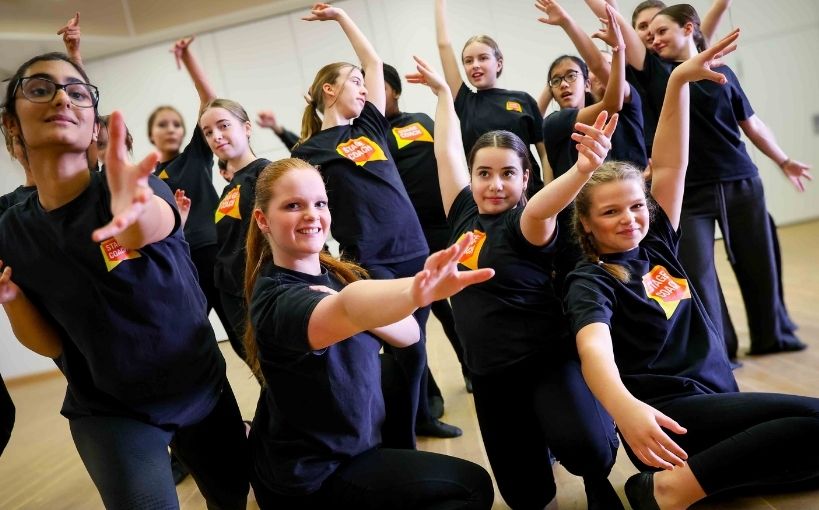
Stagecoach Performing Arts has been delivering performing arts education to children aged 2 to 18 for over 35 years. With schools across the UK and internationally, the organisation’s approach is built on a single core belief: that the performing arts are not just about performance. They are about building the kind of confidence, creativity, and resilience that shapes a child’s whole life. That belief is captured in the brand’s registered promise: Creative Courage for Life®.
Everything about the Stagecoach model is designed with the shy, hesitant, or sensitive child in mind as much as the naturally outgoing one. Classes are structured to be welcoming and progressive, not competitive. Teachers are trained to nurture every student’s individual journey. And the curriculum, grounded in the Stagecoach Educational Framework, ensures that every child is developing real, transferable skills alongside the joy of singing, dancing, and acting.
- The Two-Week Trial: A Low-Commitment Way to Start
One of the most significant barriers for parents of shy children is the fear of commitment. What if their child hates it? What if they refuse to join in? What if the money is wasted on something that turns out to be the wrong fit?
Stagecoach addresses this directly with a Two-Week Trial, which allows new students to attend two sessions before committing to a full term. There is no financial commitment upfront, and no pressure on the child to perform or participate beyond their comfort level. For hesitant families, this removes the single biggest obstacle to giving it a try. The trial is an invitation, not an audition.
- Early Stages: Designed for Children Aged 4 to 6
The Early Stages programme at Stagecoach is specifically designed for children aged 4 to 6, a period when many children are navigating the transition into school and developing their earliest sense of who they are in a group. Sessions run for 90 minutes each week and combine singing, dancing, and acting in a fun, imaginative setting that prioritises play and exploration over performance.
For shy or sensitive children starting school, Early Stages offers something genuinely valuable: a space that is entirely their own, separate from the pressures of the classroom, where the only expectation is that they show up and have a go. Many parents find that the confidence their child builds in this setting begins to show up in other areas of their life within weeks. Not because they have been pushed, but because they have been given the space to grow.
Ready to Find the Right Club for Your Child?
If you have been looking for a kids’ club where your child can grow in confidence, make new friends, and genuinely enjoy every session, Stagecoach could be exactly the right fit. Our Two-Week Trial means there is no commitment required and no pressure on your child to perform before they are ready. It is simply a chance to come and see how it feels.
Find your nearest school and book your Two-Week Trial today. We would love to welcome your child.
FAQs about Building Confidence in Children Through Kids’ Clubs and Performing Arts
How can I encourage my child to speak up more?
One of the most effective ways to help a child find their voice is to give them a safe, low-pressure space where they can practise self-expression regularly. At Stagecoach, our Early Stages classes are designed for children aged 4 to 6, combining singing, dancing, and acting in a warm, imaginative setting. Over time, the confidence children build on stage has a natural habit of showing up at home, in the classroom, and with friends. It happens gradually, and that is exactly how it should be.
How do I build confidence in a sensitive child without overwhelming them?
Sensitive children often thrive when they feel genuinely included rather than pushed to perform. The key is finding an environment where there is no pressure to be “the best,” where every child is celebrated for showing up and trying. At Stagecoach, our approach is built around encouragement and play, not competition, so students can progress at their own pace and in their own way.
How can performing arts help a shy child socialise?
Group activities like singing, dancing, and acting naturally create shared experiences, which are one of the most organic ways for children to form friendships. When a child is working towards something together with others, conversation and connection tend to follow without any forced effort. Many parents tell us that their shy child made their first real friends at Stagecoach, simply because the classes gave them something joyful to bond over.
What should I look for in a kids’ club to make sure my child feels safe?
Safety in a children’s activity goes beyond physical security. It also means emotional safety: knowing your child will not be singled out, embarrassed, or made to feel “behind.” Look for a setting with trained, experienced teachers, a clear safeguarding policy, small and well-managed group sizes, and a culture that genuinely celebrates every child’s contribution. These are the foundations we build every Stagecoach class around.
How do I know if my child is ready for a performing arts class?
There is no single “ready” moment, and children do not need any prior experience or natural talent to start. If your child enjoys music, movement, storytelling, or simply being around other children, a performing arts class can be a wonderful fit. Our Two-Week Trial gives families the chance to experience Stagecoach with no commitment, so you and your child can decide together whether it feels right.
How can I help my child build confidence at school?
Confidence at school is closely linked to how comfortable a child feels expressing themselves and connecting with peers. Activities that give children regular, structured opportunities to communicate, listen, and collaborate outside of school can make a real difference to how they show up in the classroom. Research consistently supports the role of the arts in developing communication skills, self-belief, and resilience in young children.
At what age should I start thinking about confidence-building activities for my child?
There is never a “too early” when it comes to nurturing a child’s confidence. Our Mini Stages programme welcomes children from the age of 2, with parent and carer-accompanied sessions focused on speech, movement, and social skills. By the time children reach Early Stages at ages 4 to 6, they are already building the foundations of self-expression in a group setting. Starting young simply means more time to grow.
What makes a kids’ club genuinely good for a child’s development, not just fun?
The best children’s activities blend enjoyment with real, transferable life skills. Fun is essential, but the most valuable clubs also help children develop communication, resilience, empathy, teamwork, and the ability to handle nerves. At Stagecoach, performing arts is the vehicle, but the destination is Creative Courage for Life®: skills that stay with students long after they leave the stage.
Find Your Local School


