
- Education
It’s Never Too Late for the Spotlight: Why Adults Are Joining Performing Arts Classes
There’s a quiet revolution happening in rehearsal rooms and studio spaces across the UK. More and more adults are signing up for acting classes for adults, picking up scripts for the first time in years, or stepping onto a stage they’ve always dreamed of standing on. Some are rediscovering a childhood love of performance. Others are coming to it entirely fresh, drawn by something they can’t quite put into words: a sense that being on stage, or even just playing pretend with a group of likeminded people, might do them some real good. Yes, adults can absolutely join performing arts classes, and the answer is the same regardless of age, background, or experience: you are welcome, and you will benefit. Adult performing arts classes at Stagecoach are open to adults aged 18 and over, with no prior experience required and no audition to pass.
They’re right to follow that instinct. Decades of research and countless personal stories back it up. Creative engagement in adulthood isn’t an indulgence; it’s a genuine investment in your mental wellbeing, your confidence, and your connection to the world around you. And the good news? You don’t need a single scrap of experience to get started.
At a glance
Key takeaways
- 01Acting classes for adults are open to everyone, regardless of age, background, or prior experience.
- 02The benefits go well beyond learning to perform: confidence, stress relief, social connection, and stronger communication skills are among the most commonly reported gains.
- 03Adult drama classes are designed around real adult lives, with flexible scheduling that works alongside work and family commitments.
- 04You don’t need to want a career on stage to benefit. Most adults join simply for the joy of it.
- 05Starting as a complete beginner is entirely normal, and the best classes are built with exactly that in mind.
- 06Performing arts participation is linked to measurable improvements in mental wellbeing, including reduced anxiety and increased self-confidence.
Why More Adults Are Rediscovering the Performing Arts
The creative spark doesn’t have an age limit
Many of us last stepped on a stage in a school nativity play or a sixth-form production. Life got busy. Responsibilities piled up. Creativity moved down the priority list. But the desire to express something, to inhabit a character, to tell a story, doesn’t disappear. It waits.
What’s changed is that adult drama classes have become far more accessible, welcoming, and varied than they’ve ever been. Performing arts is no longer something that happens only in youth. From established national providers to community studios in towns and cities across the country, there are now structured, approachable classes created specifically for adults who want to begin, or begin again.
Stagecoach, for example, offers performing arts classes for every age and stage, from toddlers taking their very first steps in Mini Stages through to adults stepping into the spotlight for the first time. The philosophy is consistent throughout: performing arts is for everyone, and the stage has room for all of them.
What’s driving the surge in adult performing arts classes?
There’s more going on than nostalgia. Post-pandemic, many adults reassess how they spend their free time and what genuinely nourishes them. Creative activities emerged as a major answer. At the same time, growing awareness of the mental health benefits of the arts has made performing arts classes for adults an increasingly appealing choice for people looking for something more meaningful than another evening in front of a screen.
There’s also something worth naming about midlife and beyond. Adults in their forties, fifties, and sixties often arrive at a point where the question shifts from "what do I have to do?" to "what do I actually want to do?" For many of them, the answer involves something creative, something expressive, and something that connects them with other people in a real, tangible way. Performing arts ticks all three boxes at once.
The Real Benefits of Acting Classes for Adults
Confidence that carries into everyday life
It might surprise you how quickly confidence grows in a performing arts class. Standing up in front of a room, trying something new, making mistakes and carrying on regardless: these are the exact conditions in which self-belief is built. People who come into adult acting classes expecting to feel awkward often leave feeling more capable, not just on stage but in meetings, social situations, and conversations that used to make them nervous.
This isn’t a coincidence. The techniques used in performing arts training, including vocal projection, physical presence, and learning to hold attention in a room, are the same skills that translate directly into professional and personal confidence. You’re not just learning to act; you’re learning to own the space you occupy. That shift can be profound, and it tends to happen faster than most people expect.
Connection, community, and a genuine sense of belonging
One of the most consistent things people say after joining an adult class is that they didn’t expect to make such good friends. There’s something about the creative process, the shared vulnerability, the laughter, the collaborative effort, that brings people together quickly. Adult drama classes are, at their best, communities as much as classrooms.
This matters more than it might sound. Social isolation is a growing concern across the UK, particularly among adults who find that the natural social structures of school and early working life have gradually fallen away. The social power of performing arts in building real-world community goes far beyond the stage: for adults who feel disconnected from social life, the bonds formed in a rehearsal room can be genuinely life-changing. Shared creative work creates trust, warmth, and the kind of easy camaraderie that’s surprisingly hard to find in adult life.
Stress relief and real mental wellbeing benefits
Focusing on movement, voice, character, and scene work takes your mind somewhere else entirely. The worries of the day don’t follow you into the rehearsal room; there’s simply no space for them. Creative activities are widely recognised as an effective way to reduce stress, lower anxiety, and restore a sense of play that adult life often crowds out.
There is strong and growing evidence supporting performing arts as a tool for improving mental wellbeing, from reduced anxiety to increased self-confidence, making it one of the most holistic activities an adult can take up. This isn’t a new-age claim; it’s backed by research from arts therapy, psychology, and neuroscience alike. Regular creative engagement supports emotional regulation, builds resilience, and can have a meaningful positive impact on how we experience day-to-day life.
There’s also growing evidence that sustained creative activity supports cognitive health as we age, helping to keep the mind sharp, flexible, and engaged. For adults thinking about long-term wellbeing as much as immediate enjoyment, that’s a compelling reason to sign up.
Skills that translate far beyond the stage
Active listening. Empathy. The ability to read a room and respond to what’s actually happening in it. Clear, confident communication. These are all things that performing arts training develops naturally, and all things that make a noticeable difference in professional and personal life alike.
In a workplace context, these are often described as "soft skills," but that phrase doesn’t do them justice. The ability to communicate clearly under pressure, to listen fully rather than just waiting to speak, and to adapt your register to your audience: these are high-value capabilities that performing arts training builds in a way that no workshop or corporate training programme quite manages to replicate. You develop them by actually doing them, in a live, collaborative, human environment.
What to Expect from Acting Classes for Beginners as an Adult?
Do you need any experience?
No. Genuinely, none at all. The vast majority of acting classes for beginners that adults join are designed from the ground up to welcome people who have never set foot on a stage. A good class creates a safe, non-judgemental space where trying things out, getting them wrong, and trying again is the whole point. The only thing you need to bring is a willingness to give it a go.
This is worth saying clearly because it’s the thing that holds most adults back. The assumption that there’s a bar to clear before you can walk through the door. There isn’t. Every experienced performer in every class you’ll ever attend was once a complete beginner. The difference between them and you right now is simply that they showed up first.
What does a typical class involve?
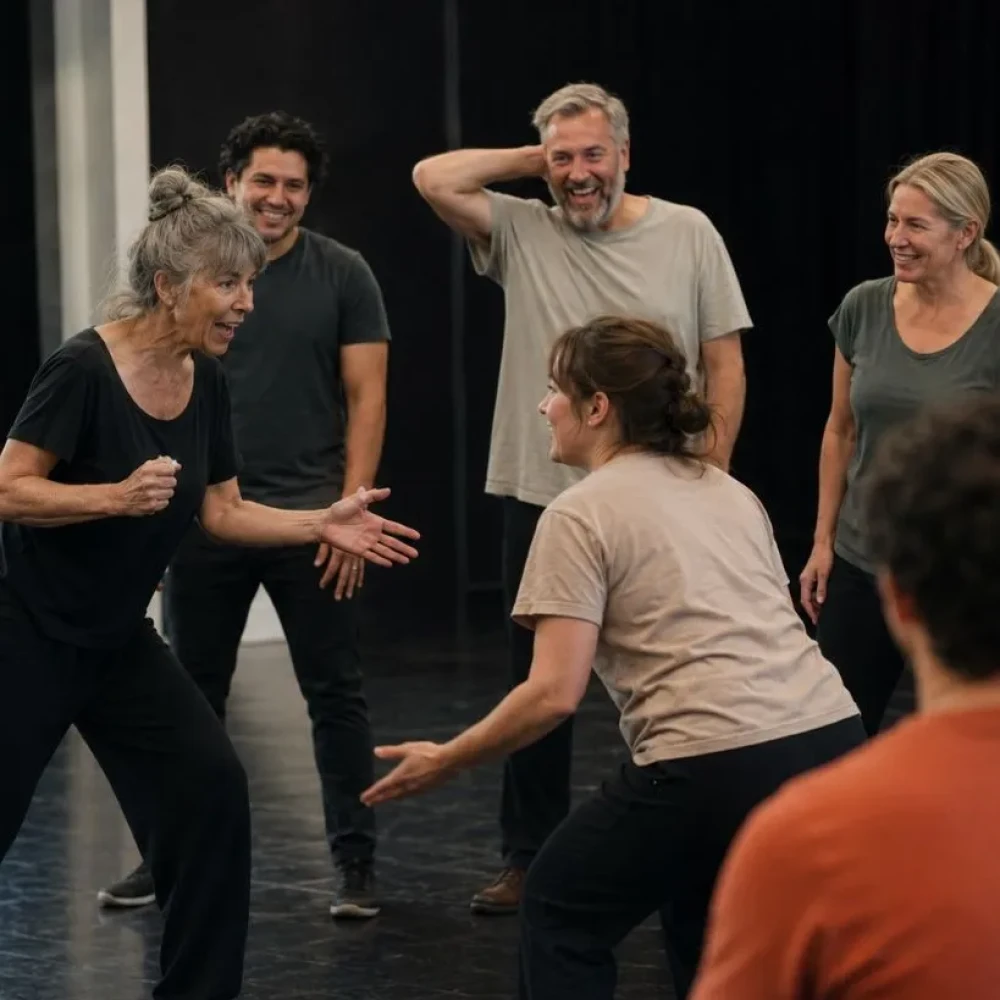
Most adult performing arts classes combine a mix of practical exercises: vocal work, physical warm-ups, improvisation, scene study, and character exploration. Classes tend to be led by experienced practitioners who know how to bring a group of varying abilities together and make everyone feel included.
Some courses focus on theatre; others take in singing, movement, and musical theatre as well. The format varies depending on the provider and class, but the atmosphere is almost always the same: energetic, encouraging, and a lot more fun than people expect. There’s a reason people talk about leaving class with more energy than they arrived with. The process of creating something together, of laughing and concentrating and surprising yourself, is genuinely energising in a way that’s hard to explain until you’ve experienced it.
How classes are structured to fit around real life
Adult classes are designed with adult schedules in mind. Most run as evening or weekend sessions, in weekly blocks that follow the term-time calendar. That structure gives you a regular, reliable commitment without the pressure of year-round attendance.
Many providers also offer taster sessions or short introductory courses, so you can try before you commit to anything longer. This low-stakes entry point is one of the things that makes starting genuinely accessible. You don’t have to sign up for a year. You can simply try it, see how it feels, and take it from there.
Is There a "Right" Age to Start?
The honest answer: no
There is no upper age limit on taking part in performing arts. Adults in their forties, fifties, sixties, and beyond join classes every term and find them every bit as rewarding as younger participants. Age brings things to the work that youth simply can’t: perspective, emotional depth, and a well of lived experience that makes character work richer and more truthful.
Drama teachers consistently note that adult learners bring a quality of engagement and emotional honesty to their work that younger students are still developing. Life has given you material to work with. A good class helps you find it.
Whether you’re returning to it or starting completely fresh
Some adults coming to classes will have drama or music in their background and want to reconnect with something they loved. Others will be starting with a blank slate. Both are equally valid starting points. The class doesn’t ask where you’ve been; it only asks where you’d like to go.
For those who want to explore a more advanced performing pathway, further stages classes for older students offer a more intensive, company-style experience that bridges the gap beautifully between youth participation and adult creative life. It’s an ideal option if you’re thinking about a meaningful gift for a young person in your life who’s ready to take things further.
Adult classes
Ready to Give It a Try?
If reading this has stirred something in you, that’s worth paying attention to. Acting classes for adults exist precisely for moments like this: when a part of you decides it’s finally time to step forward and do the thing you’ve been thinking about.
Whether you’re drawn by the idea of building confidence, finding a new community, or simply doing something creative for the sheer pleasure of it, there’s a class out there that’s the right fit. The best place to start is often with a taster session or a short beginner’s course, somewhere you can get a feel for the space, the people, and the work before committing further.
Explore adult classesUseful answers
FAQs about Acting Classes for Adults
Can adults join performing arts classes?
Absolutely. Performing arts classes for adults are widely available across the UK and are open to all ages and abilities. Whether you’re picking up a script for the first time or returning to something you loved earlier in life, there are classes designed to meet you exactly where you are. No experience, no audition, and no special talent is required to get started. Stagecoach adult classes welcome participants aged 18 and over, with the structure, pace, and content all built around making that first step as comfortable and rewarding as possible. The only requirement is a willingness to show up and try.
Do I need any previous experience to join adult acting classes?
Not at all. Most adult acting classes actively welcome complete beginners and are structured to make everyone feel comfortable from the very first session. Good teachers know how to bring together a group of different abilities so that no one feels out of their depth. The exercises used in beginner classes are designed to build skills progressively, starting with low-stakes activities like games, improvisation, and group exercises before moving into more focused scene and character work. Many people who arrive convinced they have no talent leave surprised by what they discovered they could do.
What are the wellbeing benefits of adult drama classes?
The benefits are well documented and extend well beyond the stage. Regular participation in adult drama classes has been linked to reduced stress and anxiety, improved confidence, stronger social connections, and a greater sense of purpose and play. Many people also find that the skills they develop, including active listening, empathy, and clear communication, make a real difference in their working and personal lives. There is also evidence suggesting that sustained creative engagement supports cognitive health over time, making performing arts a particularly worthwhile investment for adults thinking about long-term wellbeing as well as immediate enjoyment.
What happens in a typical acting class for adults?
Most classes combine a mix of practical activities: vocal warm-ups, physical exercises, improvisation, and scene or character work. The balance varies depending on whether the class focuses on theatre, musical theatre, or a broader performing arts curriculum that includes singing and movement. Sessions are usually led by experienced practitioners who bring both technical expertise and a real skill for putting nervous participants at ease. The atmosphere is typically lively, collaborative, and genuinely enjoyable. Most people find that the hour or two passes far more quickly than they expected, which is generally a reliable sign that something worthwhile is happening.
Are performing arts classes for adults suitable for complete beginners?
Yes, and most are specifically designed with beginners in mind. Introductory and beginner-level performing arts classes for adults focus on building a solid foundation in a supportive, non-judgemental environment. There is no expectation of prior knowledge, and the pace is set to suit the group. Teachers in well-run adult classes are experienced at working with mixed abilities and at creating an atmosphere where no one feels singled out or put on the spot before they’re ready. If you’re unsure, look for classes labelled as beginner-friendly, or contact the provider directly before you book. A good school will always be happy to talk you through what to expect.
Will I have to perform in front of other people?
In most classes, you’ll share work with the rest of the group as part of the learning process. That might feel daunting at first, but it happens gradually and always within a safe, encouraging environment. In the early weeks, this might be as simple as an improvisation exercise with a partner, or a short scene read through in a small group. Many classes culminate in a small showcase or end-of-term performance, though this is usually optional rather than mandatory. The focus throughout is on learning and enjoyment, not pressure to perform perfectly. Most people find that by the time any kind of performance opportunity arrives, they’re far more ready for it than they thought they would be.
How do adult drama classes differ from children’s performing arts classes?
Adult drama classes are paced and structured for adult learners, drawing on the life experience participants bring with them. The content, references, and exercises reflect an adult context, and classes are scheduled to fit around working and family life, typically running as evening or weekend sessions. The underlying skills being developed, including confidence, communication, and creative expression, are very similar to those at the heart of children’s classes. But the journey to them is tailored to where adults are in life, recognising that adult learners often have more self-consciousness to work through, more context to bring to character work, and different motivations for being in the room.
Is there an age at which it’s too late to start acting classes?
No. There is genuinely no upper age limit. Adults of all ages, including those in their fifties, sixties, and beyond, join performing arts classes every term and find them as rewarding and energising as any younger participant. Life experience is actually an asset in acting: it adds depth and authenticity to the work that only comes with time. Drama teachers regularly note that older adult students bring a quality of emotional truthfulness to their work that is simply not available to younger performers. The stage doesn’t care how old you are. It only cares that you showed up.


