
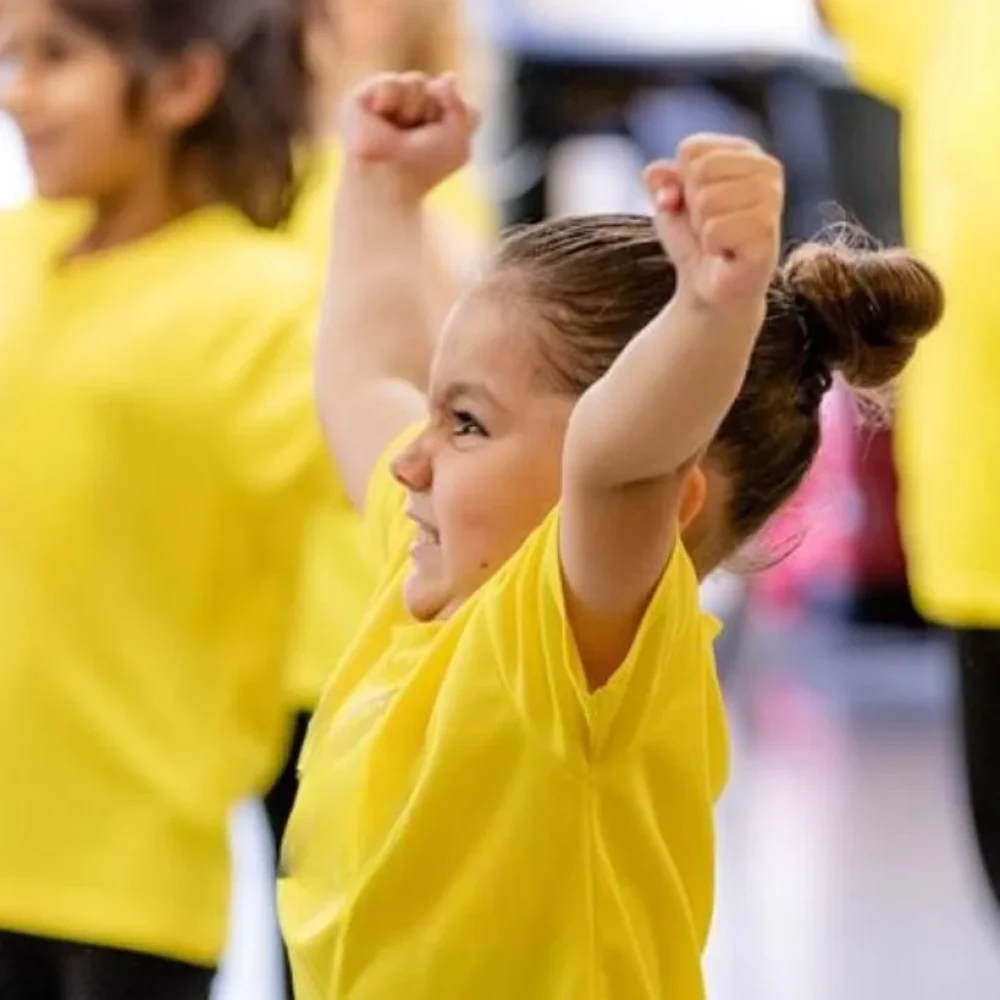
- Education
10 Confidence-Building Activities for Children (That Aren’t Screen Time)
Looking for confidence-boosting activities for young children without screens? Try 10 simple, practical ideas that support wellbeing, creativity and social skills.
Confidence in young children rarely arrives all at once. It is built in small moments, when a child feels safe to try, make mistakes, and try again.
For some children, that might look like answering a question in class, joining in with a new game, or saying hello to someone they have not met before. For others, it might be quieter: taking a turn without being prompted, sharing an idea, or staying in the room when something feels new. All of those moments matter, because confidence is not about being the loudest in the group. It is about feeling secure enough to have a go.
At Stagecoach®, we often see confidence grow through gentle, repeatable experiences where students can predict what will happen, feel supported, and build momentum over time.
If you are trying to support your child’s confidence, it helps to think in terms of practice rather than personality. Children do not need to be pushed into big ‘brave’ moments to grow. In most cases, confidence grows through gentle, repeatable experiences where they can predict what will happen, feel supported, and build momentum over time.
The activities below are designed to help children practise confidence in everyday ways, without pressure and without screen time. Some are quiet and gentle, some are active and social, and all can be adapted to suit your child’s personality. You do not need to do all ten. Choose one or two that feel realistic for your family, try them consistently for a couple of weeks, and notice the small changes.
If you would like a few more ideas tailored to the early years, you might also find how performing arts classes boost toddler confidence helpful.
Key takeaways
- Confidence grows through small, achievable steps, not big ‘brave’ moments.
- Predictable routines help children feel secure enough to join in.
- Social confidence often builds best through shared play, not forced conversation.
- Praise effort and persistence, not just results.
- Creative activities help children express themselves and feel seen.
- The best activities are the ones your child will return to regularly.
1. Roleplay and storytelling
Pretending to be a character lets children practise ‘being brave’ at a safe distance. A shy child might find it easier to speak up when they are being a firefighter, a shopkeeper, or a superhero. They can try out new words, new emotions, and new ways of interacting, without feeling like all the attention is on them.
Roleplay also helps children make sense of everyday situations. If something feels tricky, like joining a new group or asking to take a turn, acting it out can make it feel more familiar. Familiarity is often the first step towards confidence.
Try this: Act out a familiar moment, like starting school or meeting a new friend. Take turns playing different roles, and keep it light. You can use prompts such as:
- ‘What could our character say if they feel nervous?’
- ‘How could they ask to join in?’
- ‘What could they do if they made a mistake?’
If your child prefers a quieter start, begin with toys, puppets, or storybooks. Many children will happily speak ‘through’ a teddy or an action figure before they are ready to step into the role themselves.
2. ‘Helper’ jobs at home
Simple responsibilities build a sense of capability. When children feel useful, they often start to feel more confident in other areas too. It sends a quiet message: ‘We trust you. You can do this.’
It can also help with separation worries and clinginess, because children learn that they have a role in the family routine. Even very small jobs can create a sense of belonging.
The key is to choose jobs that are:
- genuinely helpful (children can tell when it matters)
- achievable (so they can succeed most of the time)
- consistent (confidence grows through repetition)
- specific (clear start and finish, rather than ‘tidy up’)
Try this: Let them choose one job they can ‘own’ each week, like setting out napkins, watering plants, matching socks, putting books back on a shelf, or carrying something light to the recycling.
A few tips that make this work better:
- Keep it predictable: do the job at the same time each day, such as after breakfast.
- Allow it to be imperfect: if the napkins are wonky, that is still a win.
- Notice the effort out loud: ‘You remembered all by yourself’ often lands better than ‘Good job’.
- Build independence slowly: show them once, do it together, then let them try solo.
If you are looking for another gentle routine that still feels like play, a weekly class can be a lovely next step. Many families start with performing arts classes for 2–4 year-olds, where children explore singing, movement and imagination alongside a parent or carer in a calm, supportive setting.
3. Confidence scavenger hunt
A scavenger hunt gives children a clear goal, a reason to explore, and plenty of small wins along the way. It also encourages decision-making, because they choose what to pick up, where to look, and what ‘counts’. For children who can feel unsure in new places, it is a gentle way to give them purpose without putting them on the spot.
It is also brilliant for conversation, because the activity naturally invites questions and ideas. Instead of ‘How was your day?’ you get ‘Do you think this leaf counts as yellow?’ That kind of low-pressure chat can be a confidence boost in itself.
Try this: Create a list of things to find on a walk, such as:
- something round
- something that smells nice
- something yellow
- something smooth
You can tailor it to your child’s age and attention span. For younger children, 4–6 items is often plenty. For older children, add a few that encourage noticing detail, like ‘something with stripes’ or ‘something that makes a sound’.
A few simple ways to make it even more confidence-building:
- Let them be the judge: if they decide a stone is ‘smooth enough’, accept it.
- Add a ‘bonus choice’: include one slot that says ‘your choice’, so they get to lead.
- Celebrate effort, not speed: noticing and looking closely is the point.
- Take a photo collection: if you do not want to carry items home, snap a picture of each find instead.
Let your child lead, even if it takes longer. That sense of being trusted to choose and decide is part of confidence-building. When they feel trusted to choose the route, make decisions, and complete the list, they are practising exactly the kind of confidence you want to see in everyday life.
4. Movement games with simple rules
Confidence is not only about talking. For many children, physical confidence comes first. Movement games give them a chance to succeed in a way that feels playful and hands-on. They get to practise coordination, balance, and control, while also learning that it is safe to try something new.
Games with clear rules can also help children who find unstructured play tricky, because the boundaries feel safe. When children know what is expected, they can relax into the fun rather than worrying about getting it ‘right’.
Try this: Play ‘freeze’ to music, copy-the-leader, animal walks, or simple yoga poses together. Keep it playful, keep it short, and end while it is still fun.
A few ways to make it even more confidence-building:
- Start easy and build up: choose one movement, then add a second once they feel comfortable.
- Let your child lead: taking turns as the leader helps them practise being in charge in a low-stakes way.
- Show that mistakes are normal: if you wobble or get it wrong, laugh it off and try again. That models resilience.
- Praise effort and focus: ‘You kept going even when it was tricky’ is powerful feedback.
If your child is hesitant, you can begin alongside them, mirroring their movements so they feel supported. Over time, many children go from copying to creating, and that shift from following to leading is a great marker of growing confidence.
5. Arts and crafts with a ‘show and tell’ moment
Creative time gives children ownership. Adding a small ‘show and tell’ moment helps them practise being seen and heard in a low-pressure way, especially if it is just with family at first. Over time, those tiny moments of sharing can make it much easier for children to speak up in other settings too.
It also teaches children that their ideas matter. That is a quiet but powerful confidence message, particularly for children who tend to worry about getting things ‘right’. With art, there is no single correct answer. There is only expression, experimenting, and finding what they like.
Try this: After a drawing or craft, ask: ‘Do you want to tell me one thing about it?’ If they do not, that is fine. You can model it first, or offer choices:
- ‘Is it happy or sleepy?’
- ‘Is it indoors or outdoors?’
- ‘What is the best bit?’
- ‘What would you add next time?’
A few ways to make this feel even safer:
- Keep the audience small: start with you, then add another trusted person.
- Make it routine: for example, five minutes of sharing on a Sunday afternoon.
- Praise the process: ‘You chose such interesting colours’ or ‘You really concentrated’ helps children value effort.
- Avoid ‘What is it?’ too early: some children feel put on the spot. ‘Tell me about it’ is gentler.
For children aged 4–6 who enjoy creative activities and thrive with a bit more structure, you might also like to look at our performing arts classes for 4–6 year-olds.
6. Cooking together (tiny tasks, big pride)
Cooking is full of confidence-building micro-skills: following steps, trying new things, coping with small mistakes, and seeing a clear result. It is also naturally structured, which helps many children feel calm. There is a beginning, a middle, and an end, and each small action leads to something real.
Many children love the feeling of contribution. ‘I helped make this’ can be a big boost, particularly for children who often doubt themselves. It is a practical way to build independence, because they can see their own impact straight away.
Try this: Give one safe task, such as stirring, sprinkling, washing fruit, kneading dough, or arranging toppings. Let your child serve what they helped make.
A few simple ways to make this even more confidence-building:
- Name the skill, not just the result: ‘You measured carefully’ or ‘You kept going even when it was sticky’.
- Make space for choice: ‘Should we add berries or bananas?’ gives a child a say.
- Keep it predictable: a weekly ‘pizza night’ or ‘pancake morning’ becomes a routine they can master.
- Treat small mistakes as part of the process: spilled flour can become part of the process. Show them how to tidy up and carry on.
If your child is cautious, start with very small tasks and build up gradually. The aim is not to produce a perfect meal. It is to help your child feel capable, trusted, and proud of what they can do.
7. A ‘friendship rehearsal’ game
Social confidence often improves when children have words ready. Practising short phrases can help, especially for children who go quiet in groups or struggle to find words quickly. When a child is nervous, their brain can go blank. Having a few familiar phrases to fall back on can make joining in feel much easier.
This is not about scripting every interaction. It is about giving children a few reliable options they can reach for, so they are not trying to think of the perfect thing to say at the moment.
Try this: Make it a game and practise three phrases:
- ‘Can I play?’
- ‘Do you want to take turns?’
- ‘Can you help me?’
To make it feel natural and fun:
- Use toys as ‘practice partners’: your child can ask a teddy, then you, then a sibling.
- Add a friendly smile and body language: practise looking up, standing nearby, and waiting for an answer.
- Practise the next step too: what to say if the answer is ‘yes’, and what to do if it is ‘not right now’.
For example, you can rehearse a calm follow-up such as:
- ‘Okay, maybe later.’
- ‘Can I watch for a bit?’
- ‘Who can I play with?’
Swap roles and let your child ‘teach’ you the phrases too. When they can coach you, they often feel more confident using the words themselves. Over time, you may notice they start to use these phrases without prompting, which is a strong sign that their social confidence is growing.
8. Nature play and mini challenges
Outdoor play gives children freedom to experiment. Mini challenges build confidence without feeling like a test. When children climb, balance, jump, or explore, they are learning what their body can do and that they can cope with small risks in a safe way. That sense of ‘I can manage this’ often carries over into social situations too.
The best challenges are self-set. When children choose the difficulty, they are more likely to stay engaged and feel proud afterwards. Self-set challenges also teach children to notice their own limits and build up gradually, which is an important confidence skill in itself.
Try this: Create a small obstacle course with safe items, such as stepping stones, a line to balance on, a place to hop, or a gentle climb. Let your child choose the order, and ask them if they want to make it easier or harder.
A few simple ways to make this even more confidence-building:
- Give it a theme: ‘jungle explorer’ or ‘mountain trail’ can help children commit to the game.
- Time-free encouragement: avoid racing unless your child asks. Steady progress matters more than speed.
- Invite problem-solving: ‘How could we make this step safer?’ or ‘What could we add next?’
- Celebrate persistence: notice when they try again after wobbling or slipping.
If your child is cautious, start with very small challenges and do them alongside them at first. As they begin to lead the course themselves, you will often see confidence grow in real time. They take more initiative, make more decisions, and start to trust their own judgement.
9. Community groups with gentle structure
A regular group can help children feel they belong. Over time, familiar faces and routines can reduce anxiety and make joining in easier.
Look for environments where children can:
- observe first
- join in gradually
- participate without being singled out
Try this: Consider weekly library sessions, toddler groups, beginner sports, or creative clubs that suit your child’s age and temperament.
If you are exploring different options by age and want to see what is available locally, you can browse performing arts classes.
10. Performing arts activities (for confidence, creativity and social skills)
Many families find that singing, dancing and acting can be a natural confidence builder, because students practise expressing themselves in a structured, supportive setting. It can also help children feel part of a group, as they work together, take turns, and celebrate progress over perfection.
What often surprises parents is how many ‘everyday’ skills are being practised at the same time. Students are learning to listen, to try something new in front of others, to cope when they feel unsure, and to keep going when something takes a bit of time to learn. Those are the building blocks of confidence, whether your child loves the spotlight or prefers to be part of the ensemble.
We often describe this wider skills-building as Creative Courage For Life®, because it is about much more than performance. It is about helping students develop confidence, creativity, and the courage to use their voice in everyday life, from raising a hand in class to making a new friend on the playground.
If you are curious about why creative activities can have such a positive ripple effect, you can read why performing arts is important in children’s development.
A quick note on confidence (and what to avoid)
If your child is nervous, it can be tempting to push them into the deep end so they ‘get used to it’. That can work for some children, but for many it does the opposite. Feeling overwhelmed can make children more likely to withdraw next time, even if the activity itself is a good fit.
Confidence usually grows faster with:
- gentle encouragement
- predictable routines
- opportunities to observe first, then join in
- praise for effort, not perfection
You might also find it helps to set expectations in a reassuring way. Instead of ‘You’ll love it, don’t worry’, try: ‘It might feel a bit new at first, and that’s okay. You can watch, and you can join in when you’re ready.’ That gives your child permission to take small steps, which is often exactly what they need.
If an activity feels overwhelming, it is fine to pause, adapt, or try a different approach. The goal is steady progress, not a sudden transformation.
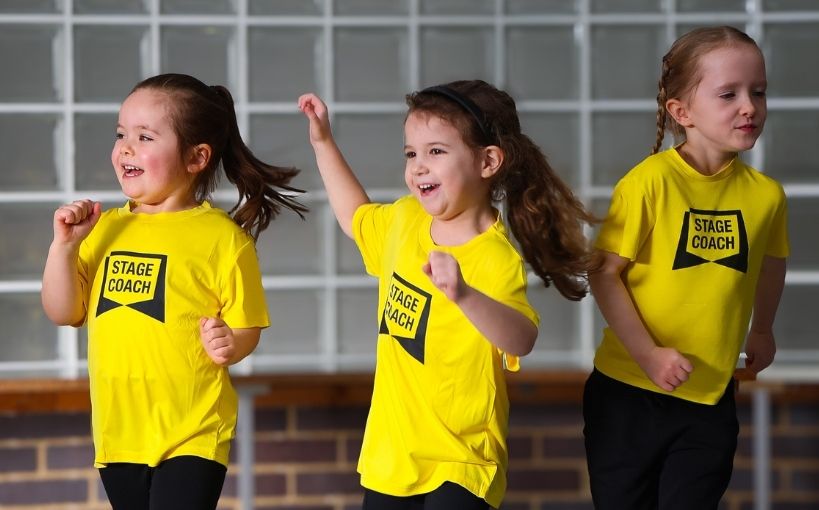
FAQs on confidence-building activities for young children
What are the best confidence-building activities for young children?
The best confidence-building activities are the ones that feel safe, structured, and achievable. Roleplay, simple responsibilities, movement games, creative projects, and gentle group activities are strong options.
How can I help a shy child build confidence without pressure?
Start with small steps. Let them watch first, then join in when ready. Praise effort, model the behaviour you want to see, and keep routines predictable.
How often should we do confidence-building activities?
Little and often is usually best. Even 10 to 15 minutes a few times a week can make a difference, especially when it is consistent.
What should I say to build confidence in the moment?
Try specific praise that focuses on effort: ‘You kept trying,’ ‘You were kind,’ ‘You listened carefully,’ or ‘You were brave to have a go.’
Are creative activities better than sport for confidence?
Both can be excellent. Creative activities often support self-expression and imagination, while sport can build physical confidence and teamwork. The right choice depends on your child.
What if my child refuses to join in?
That is common, especially at the start. Stay calm, reduce the pressure, and offer a smaller step, such as ‘Would you like to stand next to me and watch?’ Progress can be slow and still be meaningful.
How can I reduce screen time without arguments?
Replace screens with something equally easy to start: a prepared craft box, a ‘rainy day’ game bag, a short walk challenge, or a simple routine like music and movement after tea.


